Packaging Guide · Rigid Gift Boxes
Custom Rigid Gift Boxes: The Complete Buyer’s Guide to Structures, Board, Wraps, Inserts & Finishes
Specify custom rigid gift boxes like a packaging engineer: choose the right structure, chipboard thickness, wrap paper, insert and finish, avoid common mistakes, and plan MOQ and lead time.
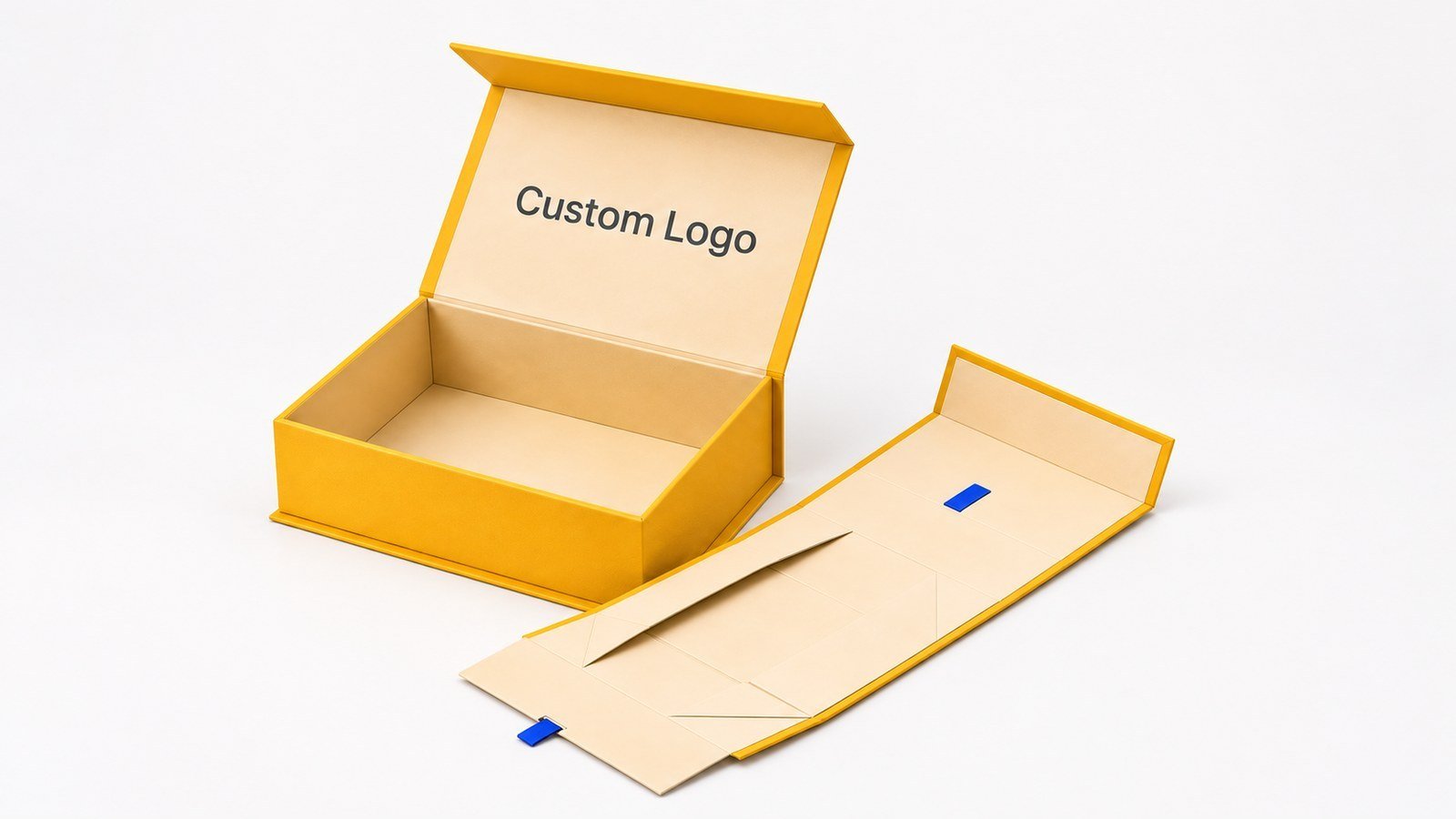
A rigid gift box is the packaging customers keep. It sits on a dresser, holds a watch for ten years, or gets reused as storage, and every time it is opened it carries your brand. That is why its specification matters more than any other box: the weight in the hand, the sharpness of the corners and the way the lid releases are all decided by numbers you put on the purchase order.
This guide turns those decisions into a clear sequence: structure, board, wrap, finish, insert, then cost and timeline.
Quick answer
At GLY Packaging: MOQ 1,000 pcs per design · samples in 3–5 days · mass production in 12–15 days after pre-production sample approval.
For most premium retail and gifting products, a lift-off lid or magnetic closure rigid box on 2 mm chipboard, wrapped in 157 g art paper or textured specialty paper, finished in soft-touch or matte lamination with one hot-foil logo, plus a paper or EVA insert is the best balance of presentation, protection and cost. Move to 3 mm board for heavy or ultra-premium items, and choose a collapsible magnetic box when freight volume matters.
1. What Is a Rigid Gift Box?
A rigid box (also called a setup box) is built from thick, non-folding chipboard (grey board) that is cut, assembled into a shell and then wrapped in printed or specialty paper. Unlike a folding carton or a mailer, it arrives at your warehouse already standing in its final shape.
What makes it different:
- Board 4–10× thicker than a folding carton, so it does not flex or crush in the hand.
- Wrapped, not printed directly — the printed or textured paper is glued around the board, which allows luxury papers, fabrics and finishes.
- Precise lid fit — lids lift with controlled resistance instead of flapping open.
- Keepsake value — customers reuse it, so your logo stays on display long after purchase.
Typical uses: jewellery and watches, cosmetics and fragrance gift sets, premium electronics, wine and spirits, corporate gifts, PR and influencer kits, and seasonal gift sets.
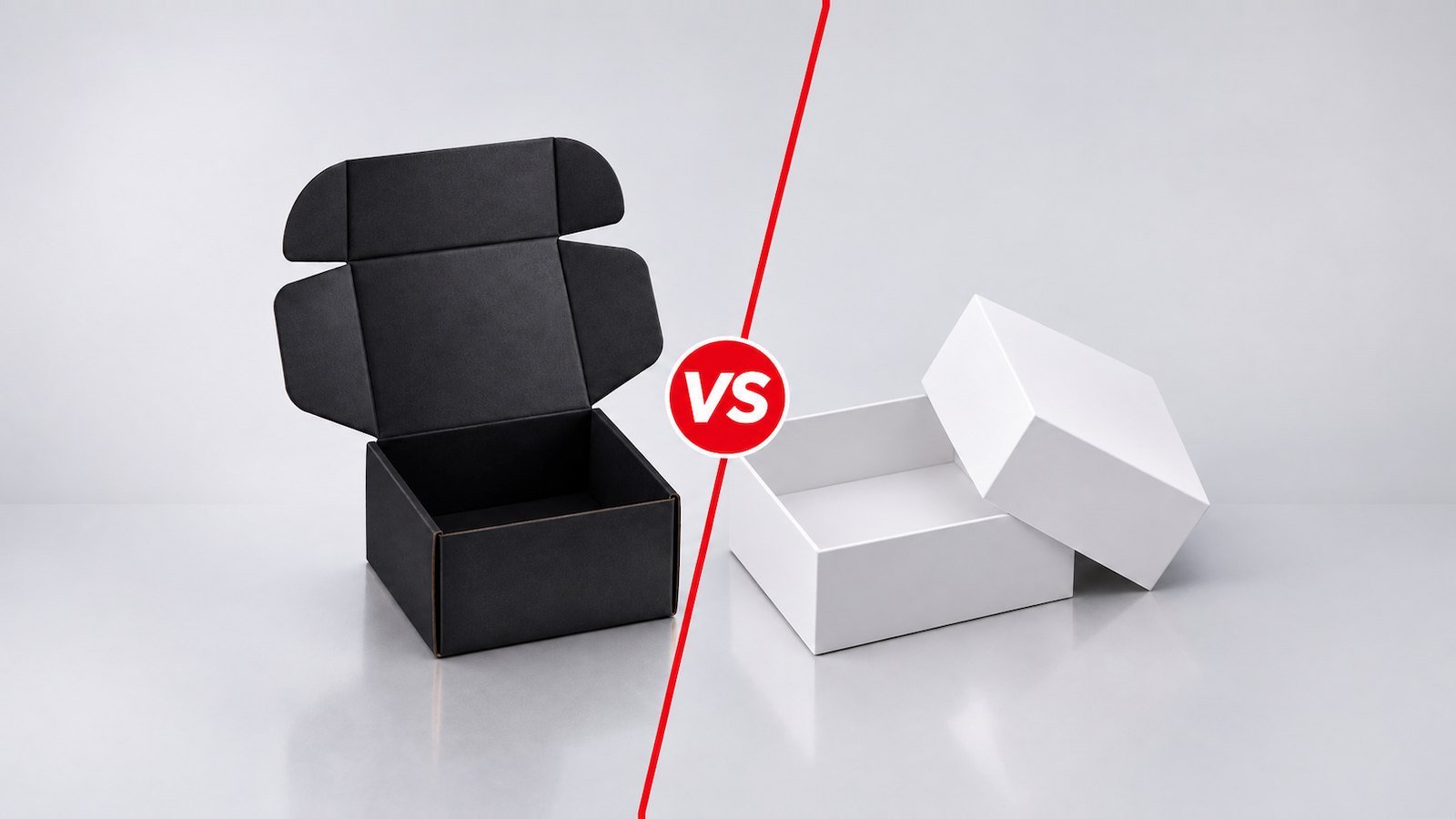
2. Rigid Box vs. Folding Carton vs. Mailer Box
| Feature | Rigid Gift Box | Folding Carton (Product Box) | Mailer Box |
|---|---|---|---|
| Board | 1.2–3 mm chipboard wrapped in paper | 250–400 g paperboard | E/B-flute corrugated |
| Ships to you | Assembled (or flat if collapsible) | Flat | Flat |
| Perceived value | Very high | Medium | Medium–high |
| Shipping protection on its own | Medium (needs an outer carton for parcel) | Low | High |
| Reusability | High — often kept | Low | Medium |
| Relative unit cost | $$$ | $ | $$ |
| Best for | Luxury retail, gifting, sets | Shelf-ready retail products | E-commerce delivery and unboxing |
Rule of thumb: if the box will be displayed, gifted or kept, choose rigid. If it mainly has to survive a parcel network, choose a mailer, and use a rigid box inside it for premium kits.
3. Step 1 — Choose the Structure
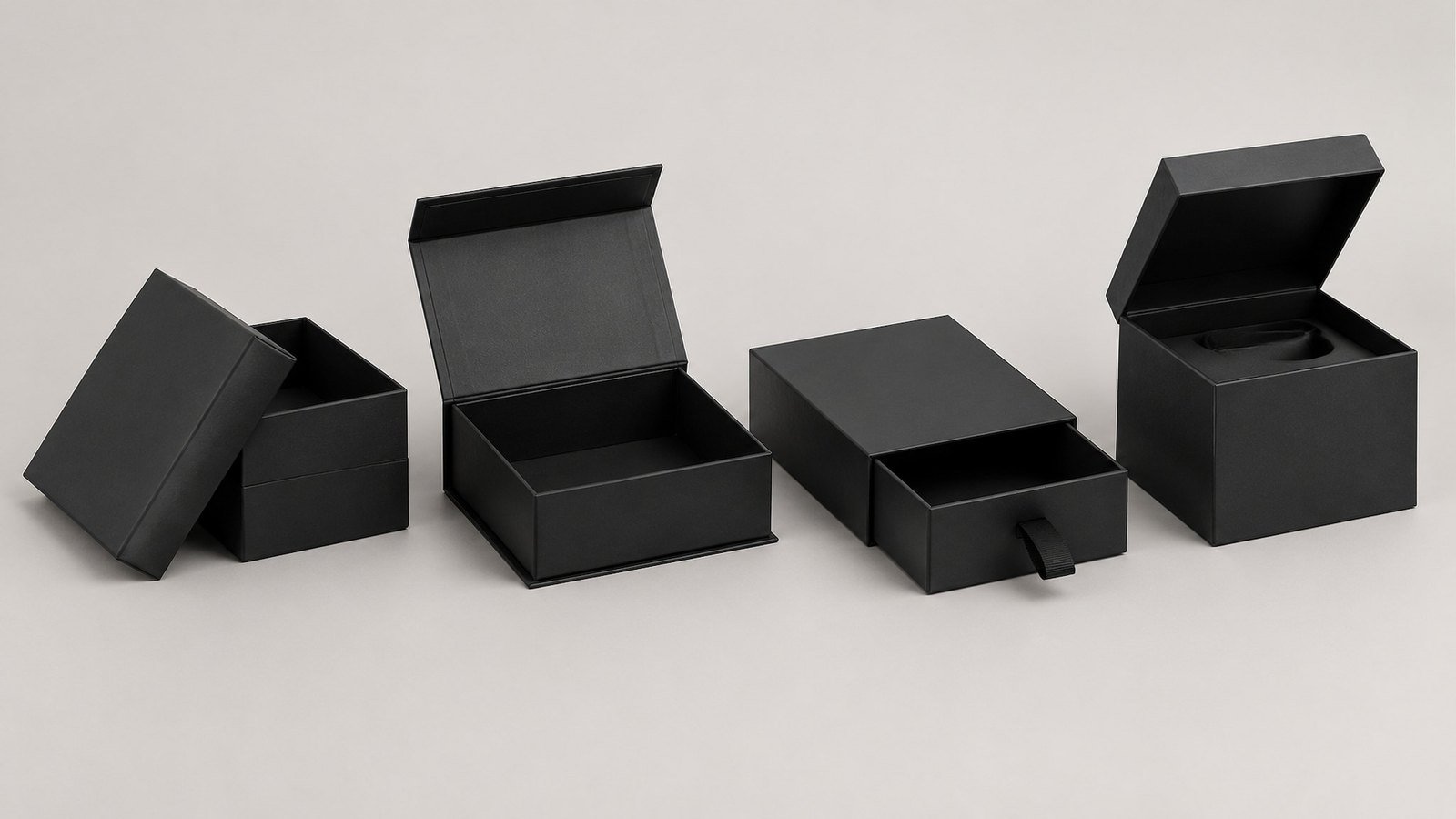
| Structure | How it opens | Best for | Watch-outs | Relative cost |
|---|---|---|---|---|
| Lift-off lid (two-piece) | Lid lifts straight off the base | Apparel, gift sets, cosmetics | Lid fit must be tight enough to avoid sliding | $$ |
| Magnetic closure (book style) | Hinged lid, closes with hidden magnets | Cosmetics, electronics, corporate gifts | Magnet position and strength need sampling | $$$ |
| Collapsible magnetic box | Ships flat, user folds into shape | Large gift boxes, export orders | Slightly less rigid at the folds | $$ (saves freight) |
| Drawer (sleeve and tray) | Tray slides out of an outer sleeve | Jewellery, chocolates, accessories | Sleeve-to-tray tolerance is critical | $$$ |
| Shoulder-neck box | Lid sits on an inner collar | Fragrance, candles, watches | Three components, highest labour | $$$$ |
| Hinged lid with ribbon stay | Lid held open by a ribbon | Wine, spirits, presentation sets | Ribbon length must be tested | $$$ |
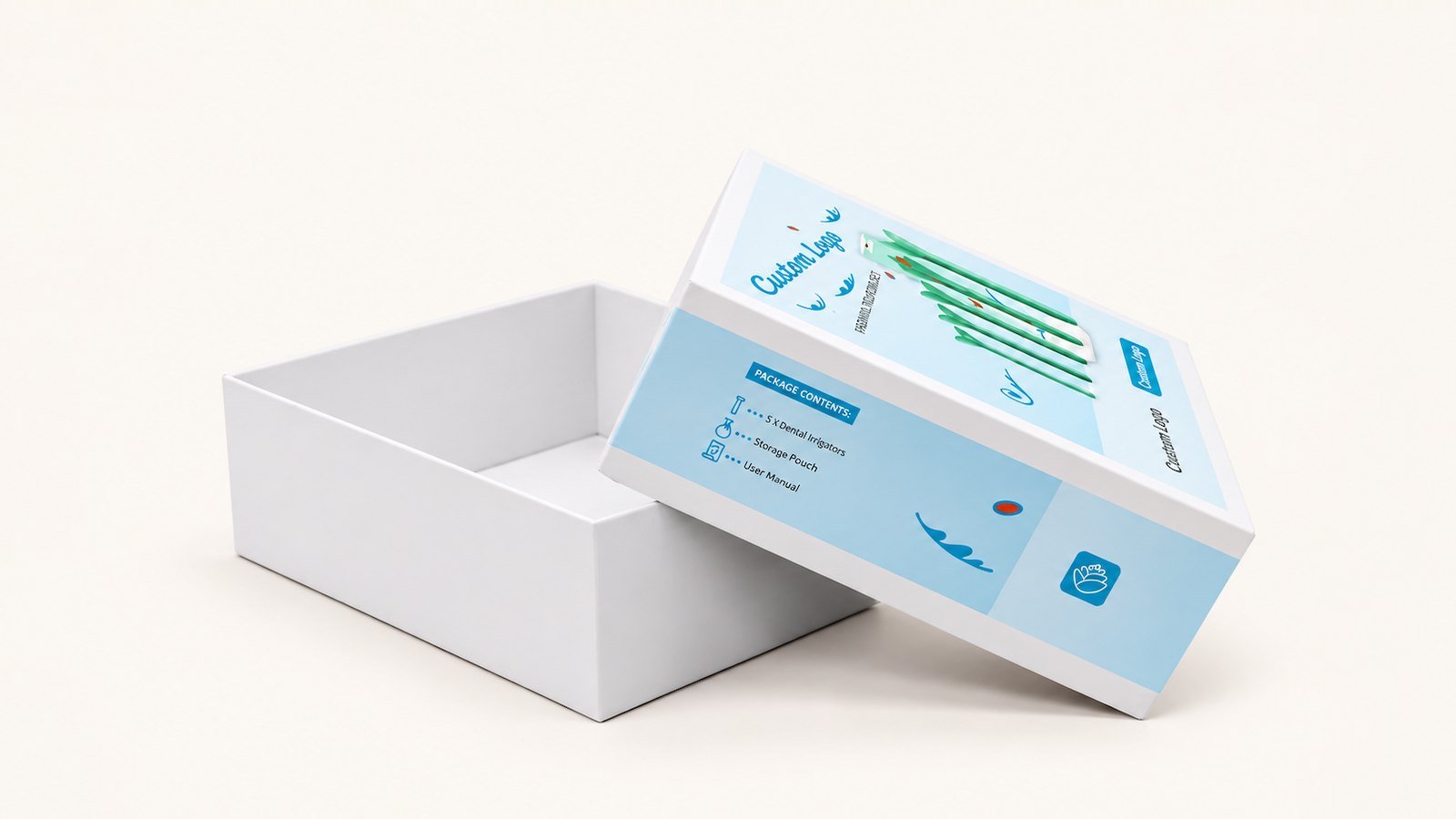
How to choose:
- Want the most “luxury” opening? Magnetic closure or shoulder-neck.
- Large boxes shipped overseas? Collapsible magnetic — you pay for much less container space.
- Small, repeat-purchase items? Drawer boxes feel premium and are easy to reuse.
- Tightest budget? Lift-off lid gives the rigid-box feel at the lowest cost.
4. Step 2 — Choose the Chipboard Thickness
The chipboard is the box’s skeleton. Its thickness decides how heavy and solid the box feels before the customer even sees the print.
| Chipboard thickness | Feel in the hand | Typical box size | Good for |
|---|---|---|---|
| 1.2–1.5 mm | Light, firm | Small (under ~15 cm) | Jewellery, small cosmetics, cards |
| 2 mm | Solid, premium — the most common choice | Small to medium | Cosmetics sets, apparel, electronics |
| 2.5–3 mm | Heavy, ultra-premium | Medium to large or heavy contents | Watches, spirits, large gift sets |
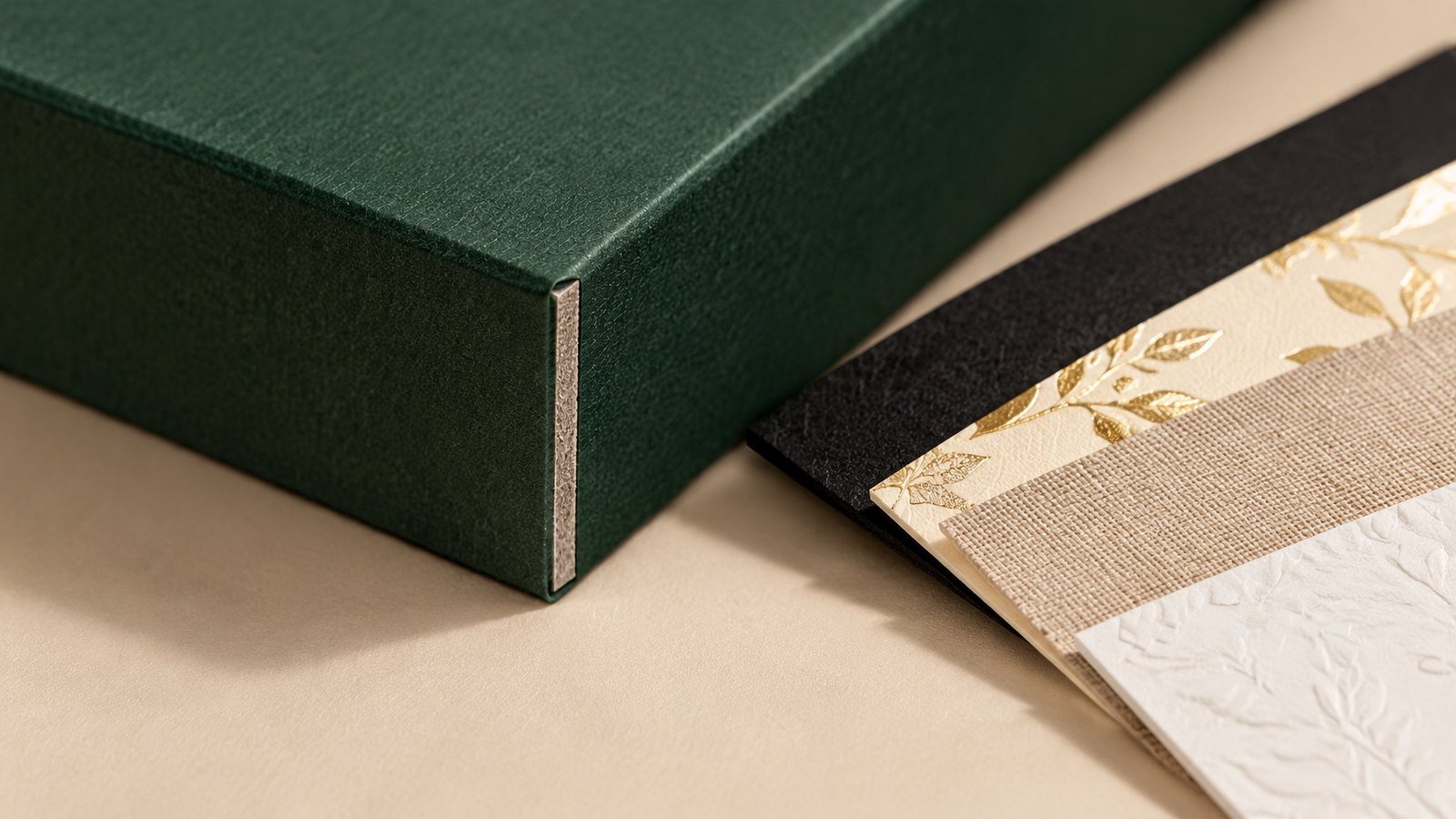
Practical tips:
- Match board to size, not just to “premium”. A large box on 1.5 mm board will bow in the middle of the lid.
- Heavier board = heavier freight. For export orders, compare 2 mm vs. 3 mm on landed cost, not unit price only.
- Ask for density, not just thickness. Dense board cuts cleanly and gives sharp corners; low-density board shows rounded, bulky corners after wrapping.
5. Step 3 — Choose the Wrap Material
| Wrap material | Look and feel | Print capability | Best for |
|---|---|---|---|
| Coated art paper (≈ 157 g) | Smooth, bright colours | Full-colour CMYK + Pantone | Photographic or colourful designs |
| Black or coloured card paper | Deep, uniform colour without printing | Foil, emboss, screen print | Minimal luxury designs |
| Textured specialty paper (linen, leather-grain, pearl) | Tactile, crafted | Limited — usually foil or deboss | Fragrance, jewellery, premium gifting |
| Kraft paper | Natural, eco | 1–2 spot colours | Eco and artisan brands |
| Fabric / leatherette | Ultra-premium | Foil and deboss only | Watches, limited editions |
Tip: if your design uses a solid brand colour across the whole box, ask whether a coloured specialty paper is cheaper and richer than printing that colour on white paper — it often is, and it avoids white cracking at the corners.
6. Step 4 — Choose Finishes That Look Expensive (Without Overspending)
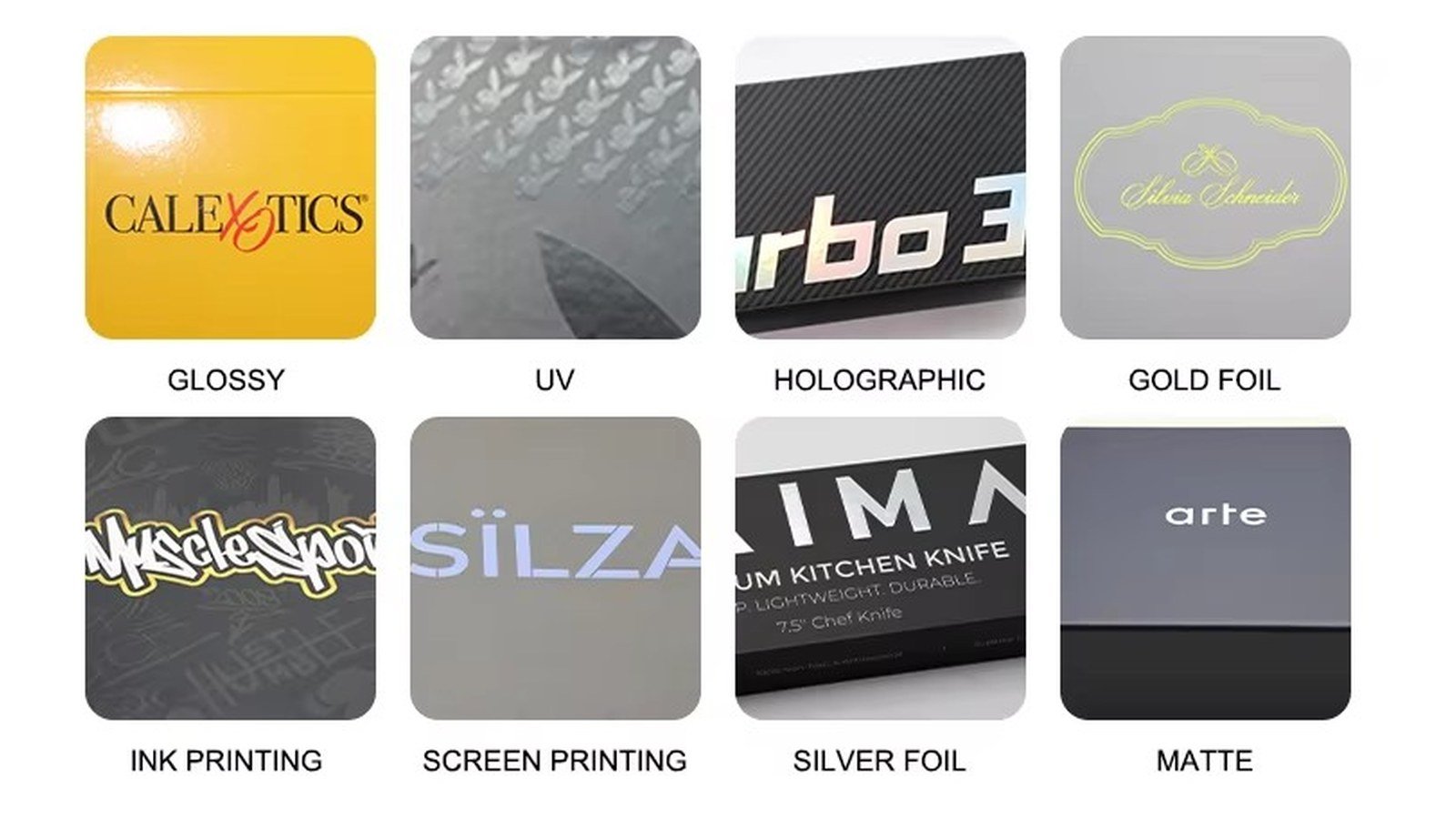
| Finish | Effect | Cost impact | Proven pairing |
|---|---|---|---|
| Matte lamination | Calm, modern, hides fingerprints | Low | Base finish for most rigid boxes |
| Soft-touch lamination | Velvet hand-feel | Low–medium | With gold foil logo — the classic luxury combo |
| Gloss lamination | Vivid colour, shine | Low | Photographic or bright designs |
| Hot foil stamping | Metallic gold, silver, rose gold | Medium (needs a plate) | One logo on lid, not everywhere |
| Embossing / debossing | Raised or pressed texture | Medium (needs a die) | Blind deboss on textured paper |
| Spot UV | Gloss highlight on matte | Low–medium | Patterns, logos on dark matte |
| Holographic foil | Rainbow metallic | Medium | Tech, youth and beauty brands |
The “one hero detail” rule: the most expensive-looking rigid boxes usually combine one base finish + one accent (for example, soft-touch + gold foil logo). Stacking foil, emboss, spot UV and holographic on one lid increases cost and often looks busier, not richer.
7. Step 5 — Choose the Insert
The insert holds the product in place, frames the reveal and prevents damage in transit.
| Insert | Protection | Look | Recyclability | Best for |
|---|---|---|---|---|
| Paperboard / card insert | Medium | Clean, printable | Fully recyclable | Cosmetics, sets, accessories |
| Wrapped chipboard insert | Medium–high | Matches the box | Recyclable | Gift sets, bottles |
| EVA foam | Very high, precise | Premium, sharp cut-outs | Hard to recycle | Electronics, glass, fragile items |
| Sponge + velvet / satin | High | Soft, jewellery-style | Hard to recycle | Jewellery, watches |
| Moulded pulp | High | Natural, eco | Recyclable / compostable | Eco brands, tech accessories |
| Satin or silk lining | Low (decorative) | Luxurious | Low | Spirits, fragrance |
Insert tips:
- Send the actual product or an exact sample for insert cavities — drawings alone often miss bottle shoulders, caps or cable bulges.
- Add a ribbon pull or finger notch if the product sits deep in the cavity.
- For multi-item sets, decide the layout order of the reveal (hero product in the centre or first row).
8. The Seven Most Common Rigid Box Mistakes
| Mistake | What happens | How to avoid it |
|---|---|---|
| Choosing board by price, not size | Lid bows, corners soften | Use 2 mm+ for medium and large boxes |
| Full-coverage dark print on white paper | White cracks visible at corners and folds | Use coloured paper or ask for a colour-matched edge |
| Too many finishes | Higher cost, cluttered look | One base finish + one accent |
| Insert designed from a drawing only | Product too tight or rattles | Send physical product samples |
| Ignoring magnet strength | Lid pops open or is hard to open | Test magnet pull on the sample |
| Ignoring freight volume | Shipping costs exceed box cost | Consider collapsible structures |
| Approving colour on screen | Colour shifts on the actual paper | Approve a printed pre-production sample |
9. What Drives the Unit Price
- Quantity — tooling and set-up are shared across the run. At GLY the MOQ is 1,000 pcs per design.
- Structure — lift-off lid < magnetic < drawer < shoulder-neck (more parts, more hand work).
- Size and board thickness — more board, more wrap paper, more freight.
- Wrap material — specialty and fabric wraps cost more than coated art paper.
- Number of finishes — each foil, emboss or spot UV adds a process and often a tool.
- Insert — EVA and velvet inserts cost more than paperboard.
- Accessories — magnets, ribbons, metal plates, closures.
- Freight — assembled rigid boxes are bulky; collapsible designs can lower landed cost.
Where to spend: the lid surface and the reveal. Where to save: invisible board upgrades, finishes on the box base, and decorative inserts nobody sees.
10. From Brief to Delivery: The Production Timeline
- 01Brief & quote
- 02Structure & dieline
- 03Sample
- 04Approval
- 05Mass production
- 06QC
- 07Shipping
| Stage | What you provide | What you receive | Time at GLY |
|---|---|---|---|
| 1. Brief | Product size and weight, quantity, structure idea, artwork or style references | Quote and recommended specification | — |
| 2. Dieline | Confirmed inner dimensions and insert layout | Dieline for box, wrap and insert | — |
| 3. Sample | Artwork on dieline | Structural and/or printed sample | 3–5 days |
| 4. Mass production | Signed approval of the pre-production sample | Finished rigid boxes, QC-checked and export-packed | 12–15 days after sample approval |
Planning tip: rigid boxes are mostly hand-assembled, so peak seasons (Q4 gifting, Valentine’s Day, Chinese New Year) fill factory capacity early. Confirm samples at least 4–6 weeks before your launch date to leave room for approval and shipping.
11. Pre-Order Checklist
- ☐ Product dimensions and weight (or physical samples for the insert)
- ☐ Inner box dimensions (L × W × H)
- ☐ Structure: lift-off, magnetic, collapsible, drawer, shoulder-neck
- ☐ Chipboard thickness (1.5 / 2 / 3 mm) or ask for a recommendation
- ☐ Wrap paper: art paper, coloured, textured, kraft, fabric
- ☐ Print: CMYK / Pantone codes, inside and outside
- ☐ Finishes: lamination type plus foil / emboss / spot UV
- ☐ Insert type and number of cavities
- ☐ Accessories: ribbon, magnet, pull tab, logo plate
- ☐ Quantity per design and number of designs
- ☐ Destination, shipping method and target delivery date
- ☐ Required certificates (e.g. FSC paper)
12. Why Brands Work with GLY Packaging

| What you need | What GLY offers |
|---|---|
| Low entry quantity | MOQ 1,000 pcs per design |
| Fast sampling | 3–5 days for samples |
| Reliable lead time | 12–15 days mass production after pre-production sample approval |
| Production capacity | 40,000 m² factory in Shenzhen |
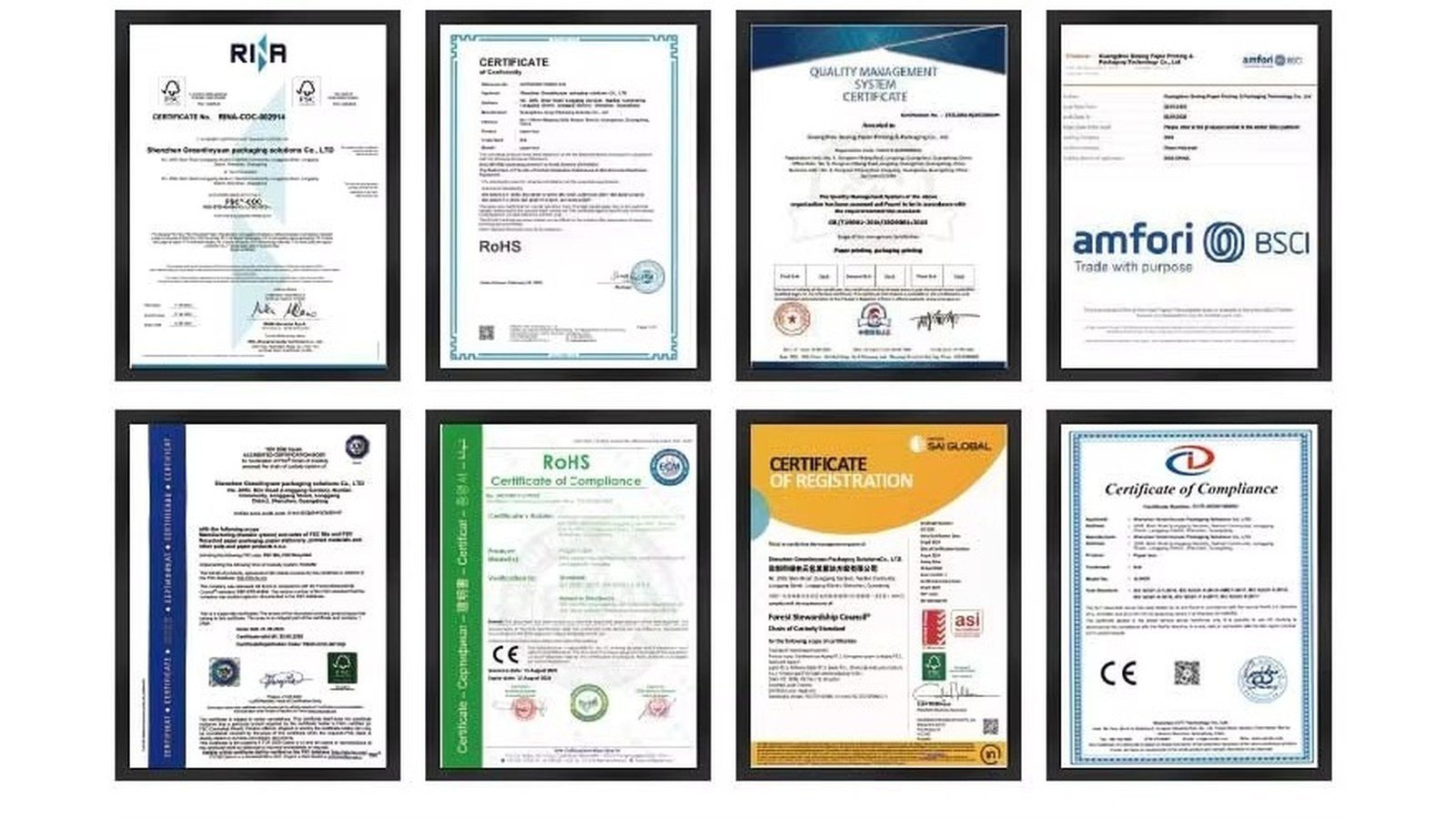
| Compliance documents | FSC, BSCI, ISO 9001, CE, MSDS |
| One supplier for your whole range | Rigid gift boxes, mailer boxes, corrugated boxes, gift bags and product boxes in matching colours |

13. FAQ
What is the difference between a rigid box and a folding carton? A rigid box uses thick chipboard (usually 1.5–3 mm) wrapped in paper and does not fold flat; a folding carton uses thin paperboard and ships flat. Rigid boxes feel heavier and more premium and are often kept by customers.
What chipboard thickness should I choose? 2 mm is the most common choice for premium boxes. Use 1.2–1.5 mm for small, light items and 2.5–3 mm for large, heavy or ultra-premium boxes.
Can rigid boxes be shipped flat? Standard rigid boxes ship assembled. If freight volume matters, choose a collapsible magnetic box, which ships flat and folds into a rigid box in seconds.
Can I print the inside of a rigid box? Yes. The inner lid and base can be wrapped in printed paper, which is a popular place for a thank-you message or brand story.
Are rigid gift boxes recyclable? The chipboard and paper wrap are paper-based. For the best recyclability, choose paper or pulp inserts instead of foam, limit plastic lamination, and use water-based finishes where possible.
What is the minimum order quantity for custom rigid boxes? At GLY Packaging the MOQ is 1,000 pcs per design.
How long does it take to produce custom rigid boxes? Samples take 3–5 days. Mass production takes 12–15 days after you approve the pre-production sample, plus shipping time to your location.
Ready to Build Your Rigid Gift Box?
GLY Packaging manufactures custom rigid gift boxes, mailer boxes, corrugated boxes, gift bags and product boxes in a 40,000 m² factory certified to FSC, BSCI, ISO 9001, CE and MSDS. Send us your product size, quantity (from 1,000 pcs per design) and style references, and our team will recommend the structure, board, wrap and insert, then return a dieline. Samples are ready in 3–5 days.
Ready to upgrade your packaging?
Get a free quote and a practical packaging recommendation within 24 hours.