Packaging Guide · Mailer Boxes
Custom Mailer Boxes: The Complete Buyer’s Guide to Board, Structure, Printing & Sizing
Plan custom mailer boxes like a packaging engineer: choose E/B/F flute, ECT grade, closure style, print method and finish, size the box correctly, and avoid costly first-order mistakes.
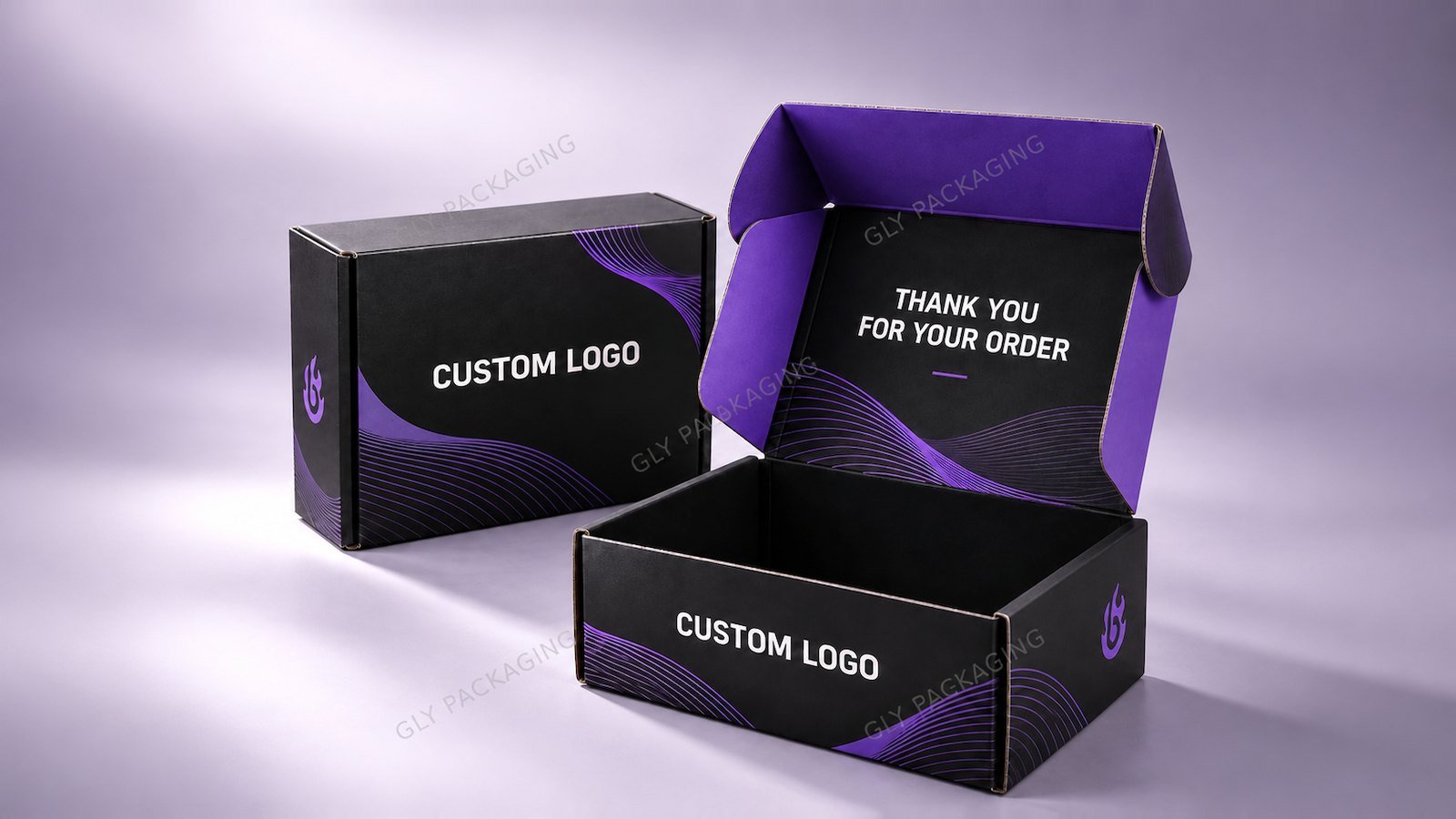
A custom mailer box has two jobs that pull in opposite directions: it must survive a parcel network that drops, stacks and squeezes it, and it must look good enough that your customer films the unboxing. Most guides cover only one side — either “design tips” or “flute charts”. This guide covers both, in the order a buyer actually makes decisions.
Quick answer
At GLY Packaging: MOQ 1,000 pcs per design · samples in 3–5 days · mass production in 12–15 days after pre-production sample approval.
For most e-commerce products under 5 kg, a single-wall E-flute mailer, printed CMYK outside and 1–2 colours inside, with a roll-end tuck-front (RETF) structure, is the best balance of protection, print quality and unit cost. Move to B-flute for heavier or more fragile goods, F-flute for the slimmest premium look, and add a tear strip if fast, tamper-evident opening matters.
1. What Is a Custom Mailer Box?
A mailer box is a one-piece, die-cut corrugated box that folds into a self-locking tray with an attached hinged lid. No glue or tape is needed to assemble it, and the lid tucks into the front panel. “Custom” means you control the dimensions, board, structure, print (outside and inside) and finishes.
Why brands choose mailer boxes:
- Ships flat — saves warehouse space and inbound freight cost.
- Fast pack-out — folds in seconds without tape guns.
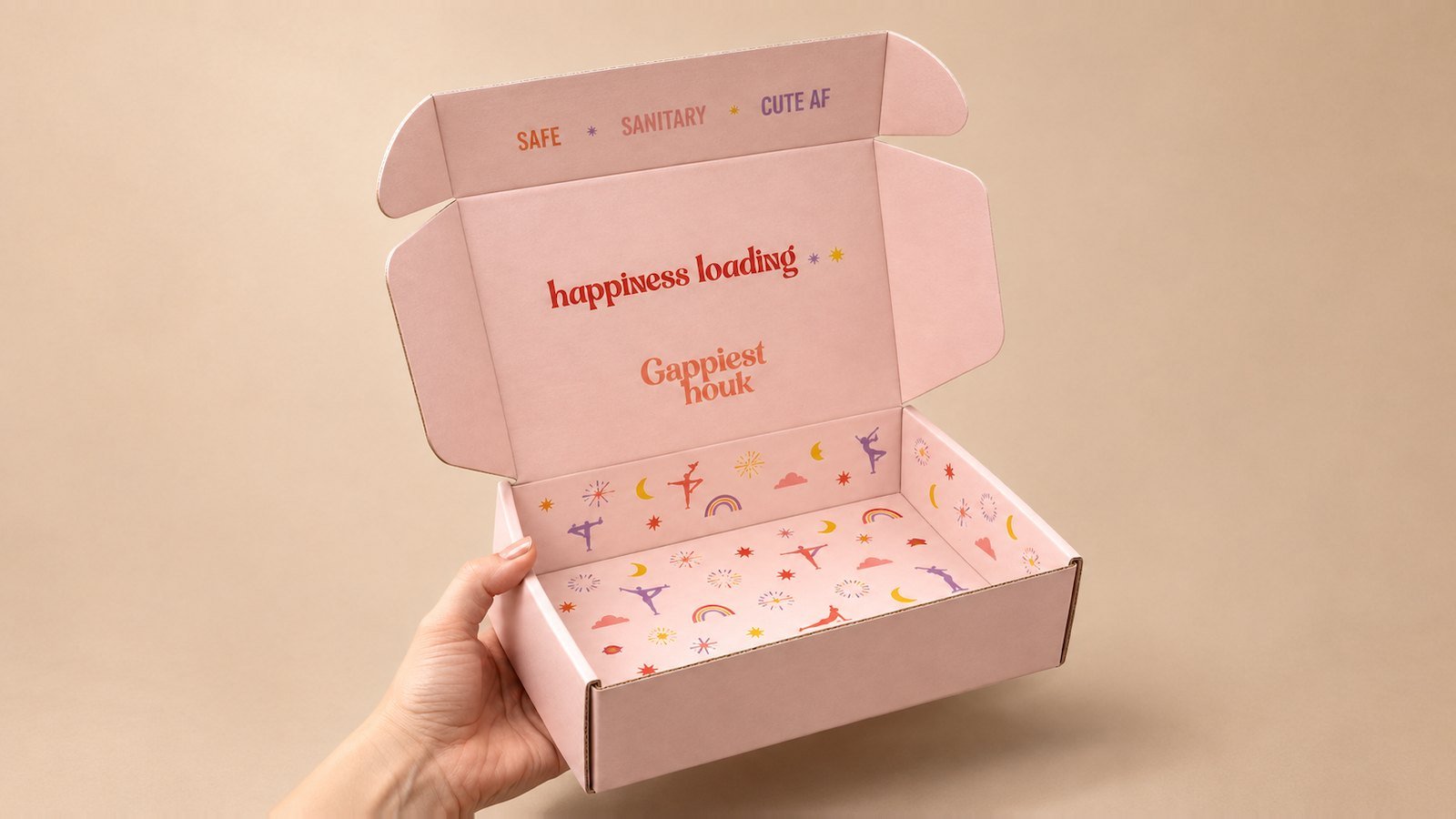
- Two print surfaces — the outside for the doorstep, the inside for the “reveal”.
- Strong for its weight — the corrugated structure protects without heavy board.
- Recyclable — paper-based board goes into the standard curbside paper stream (finishes such as full lamination can complicate this; see Section 6).
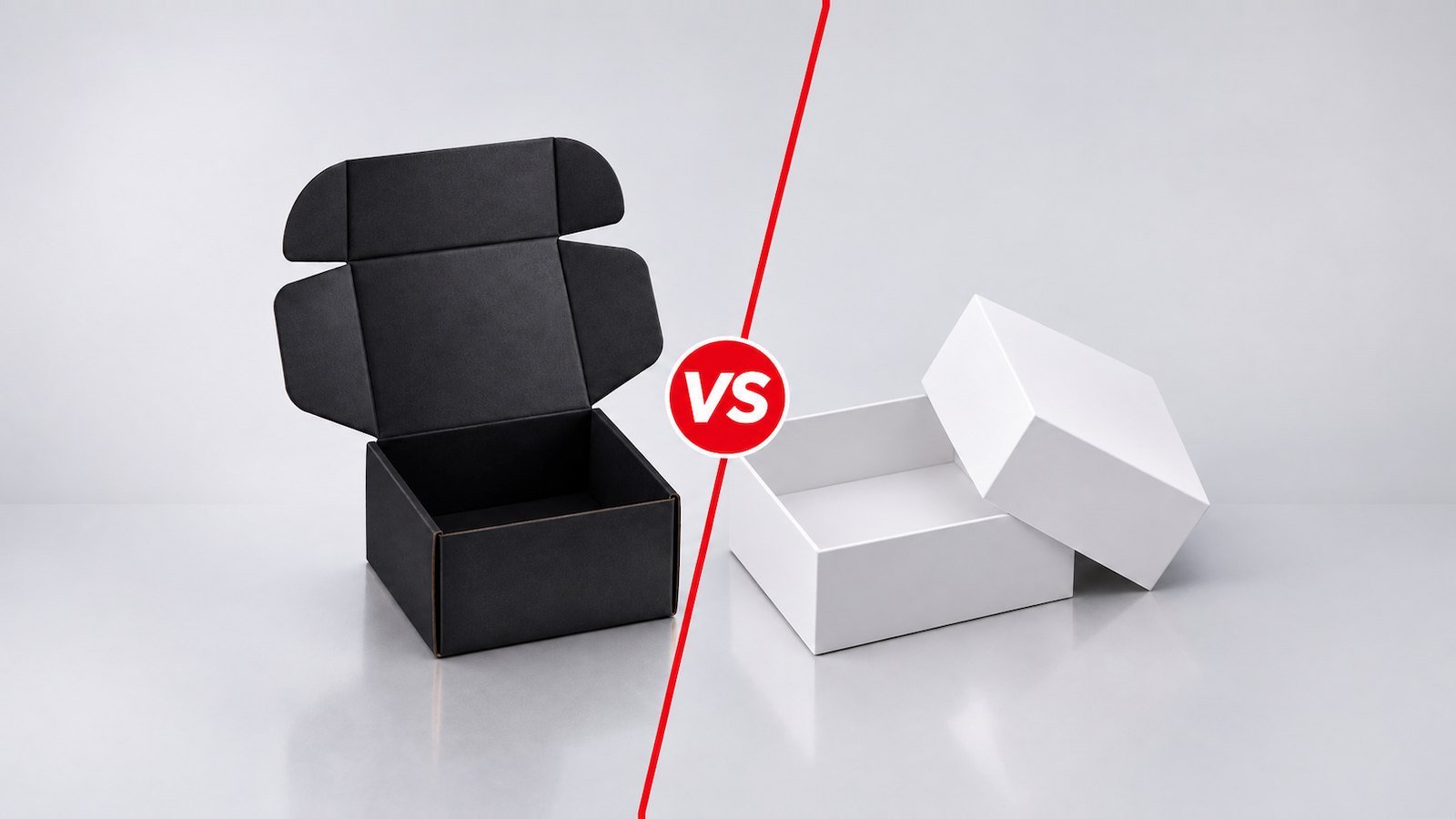
2. Mailer Box vs. Shipping Box vs. Rigid Box
Choosing the wrong category costs more than any detail inside it. Use this table first.
| Feature | Custom Mailer Box | Corrugated Shipping Box (RSC) | Rigid Gift Box |
|---|---|---|---|
| Typical use | DTC e-commerce, subscriptions, PR kits | Bulk shipping, heavy goods, outer cartons | Luxury retail, jewelry, electronics, gifting |
| Construction | One-piece die-cut corrugated, folds without glue | Four flaps top and bottom, sealed with tape | Thick chipboard (grey board) wrapped in printed paper |
| Ships flat? | Yes | Yes | Usually no (collapsible versions exist) |
| Ships unprotected in parcel networks? | Yes | Yes | Usually needs an outer shipper |
| Print quality | High (litho-lam or digital on E/F-flute) | Basic to medium (flexo) | Very high (wrap paper) |
| Unboxing experience | Strong | Weak | Premium |
| Relative unit cost | $$ | $ | $$$–$$$$ |
Rule of thumb: if the box is the shipping container and the brand moment, choose a mailer. If it only has to protect goods in transit, choose an RSC. If it sits on a shelf or in a gift bag, choose a rigid box.
3. Step 1 — Choose the Board: Flute, Liner and Grade
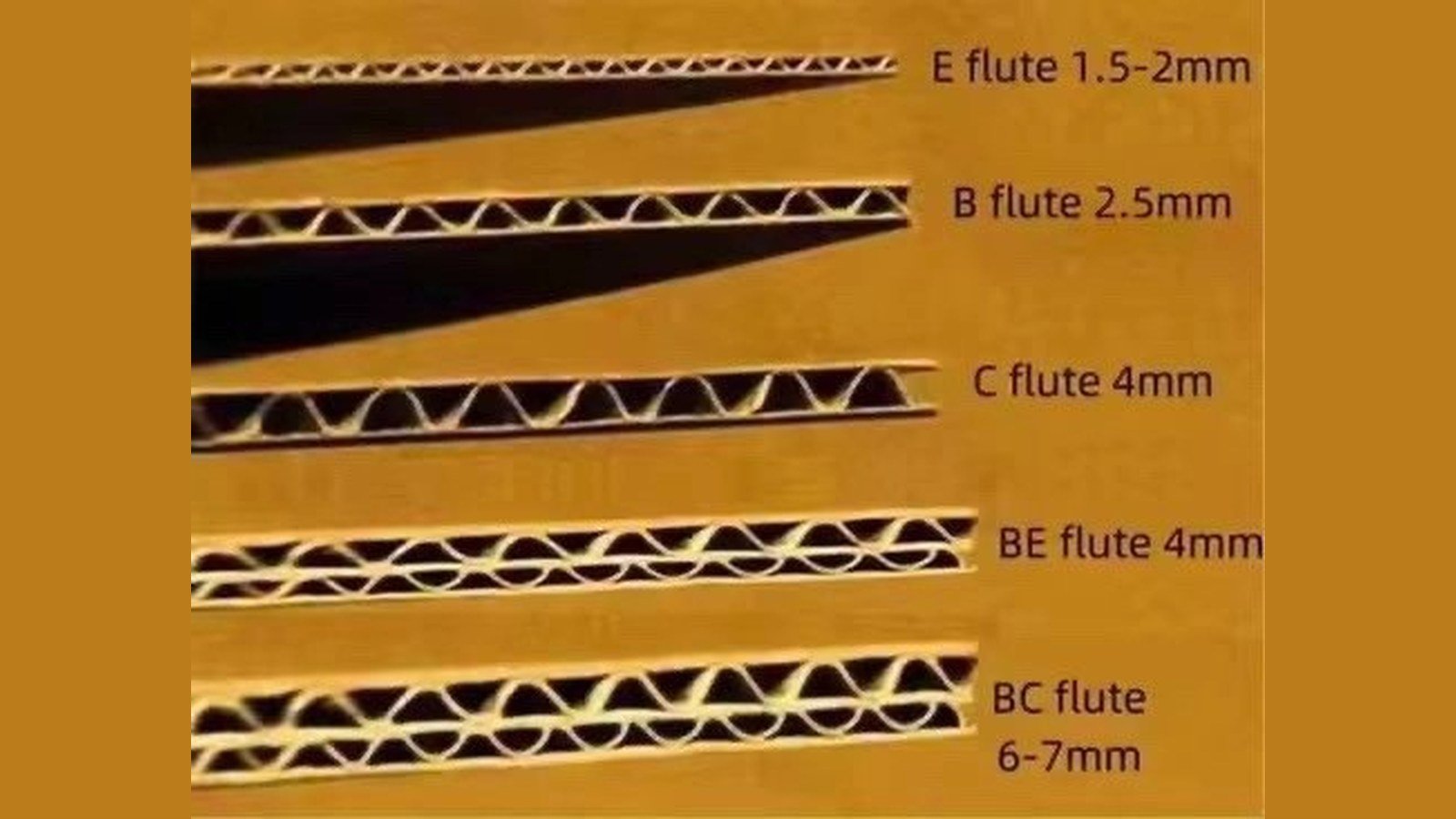
3.1 Flute profile
The flute is the wavy layer between the two flat liners. Its size controls thickness, cushioning and print quality.
| Flute | Thickness (GLY board) | Best for in mailer boxes | Print quality |
|---|---|---|---|
| F (micro-flute) | ~0.8 mm | Slim premium mailers, cosmetics, small accessories | Excellent |
| E | 1.5–2 mm | The default for most mailers — apparel, beauty, small electronics | Very good |
| B | ~2.5 mm | Heavier products, glass, multi-item kits | Good |
| C | ~4 mm | Large or heavy mailers; less common for printed mailers | Fair |
| BE double-wall | ~4 mm | Heavy or fragile items that still need sharp print (E side out) | Very good |
| BC double-wall | 6–7 mm | Heavy, export or palletised shipments | Fair |
3.2 Strength grade: ECT vs. burst
Corrugated strength is rated in two ways:
- ECT (Edge Crush Test) — load a board can carry on its edge, in lb per inch. Predicts stacking strength. This is the more useful number for modern parcel and pallet shipping.
- Burst (Mullen) test — pressure needed to punch through the board face, in psi. Predicts puncture and rough-handling resistance.
| Typical grade | ECT | Approx. burst equivalent | Packed-weight guide |
|---|---|---|---|
| Light single-wall | 29 ECT | 175 lb | Up to ~15 kg |
| Standard single-wall | 32 ECT | 200 lb | Up to ~20 kg |
| Heavy single-wall | 44 ECT | 275 lb | Up to ~30 kg |
| Double-wall | 48–61 ECT | 275–350 lb | Heavy, fragile or export loads |
The two tests measure different properties, so the equivalences are approximate.
Practical takeaway: most mailer boxes for products under 5 kg do not need more than a 32 ECT-class board. Paying for double-wall when you don’t need it raises unit cost and dimensional-weight shipping charges.
3.3 Liner colour and surface
- Kraft (brown) outside — natural, eco look; colours print darker and less saturated.
- White (bleached) outside — bright, accurate colours; best for full-colour branding.
- Kraft outside / white inside — a popular combination: eco exterior, bright printed interior reveal.
- Litho-laminated — a pre-printed coated sheet laminated onto the flute; gives the sharpest, most saturated images.
4. Step 2 — Choose the Structure
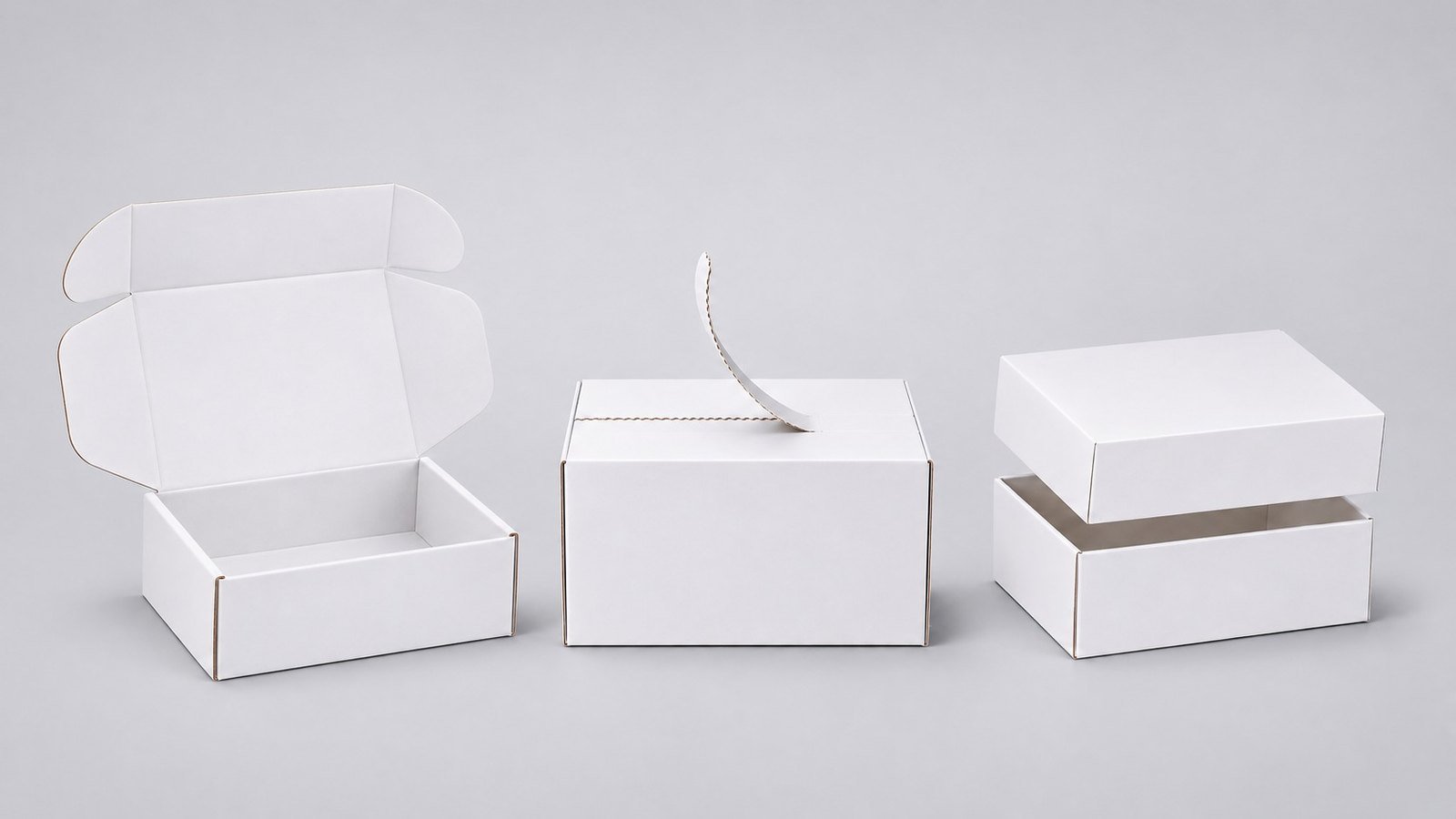
| Structure | How it closes | Strengths | Watch-outs | Best for |
|---|---|---|---|---|
| Roll-end tuck-front (RETF) | Lid tucks into front panel; rolled double-walled sides | Strong walls, clean look, reusable | Needs tape or sticker for tamper evidence | Most DTC and subscription boxes |
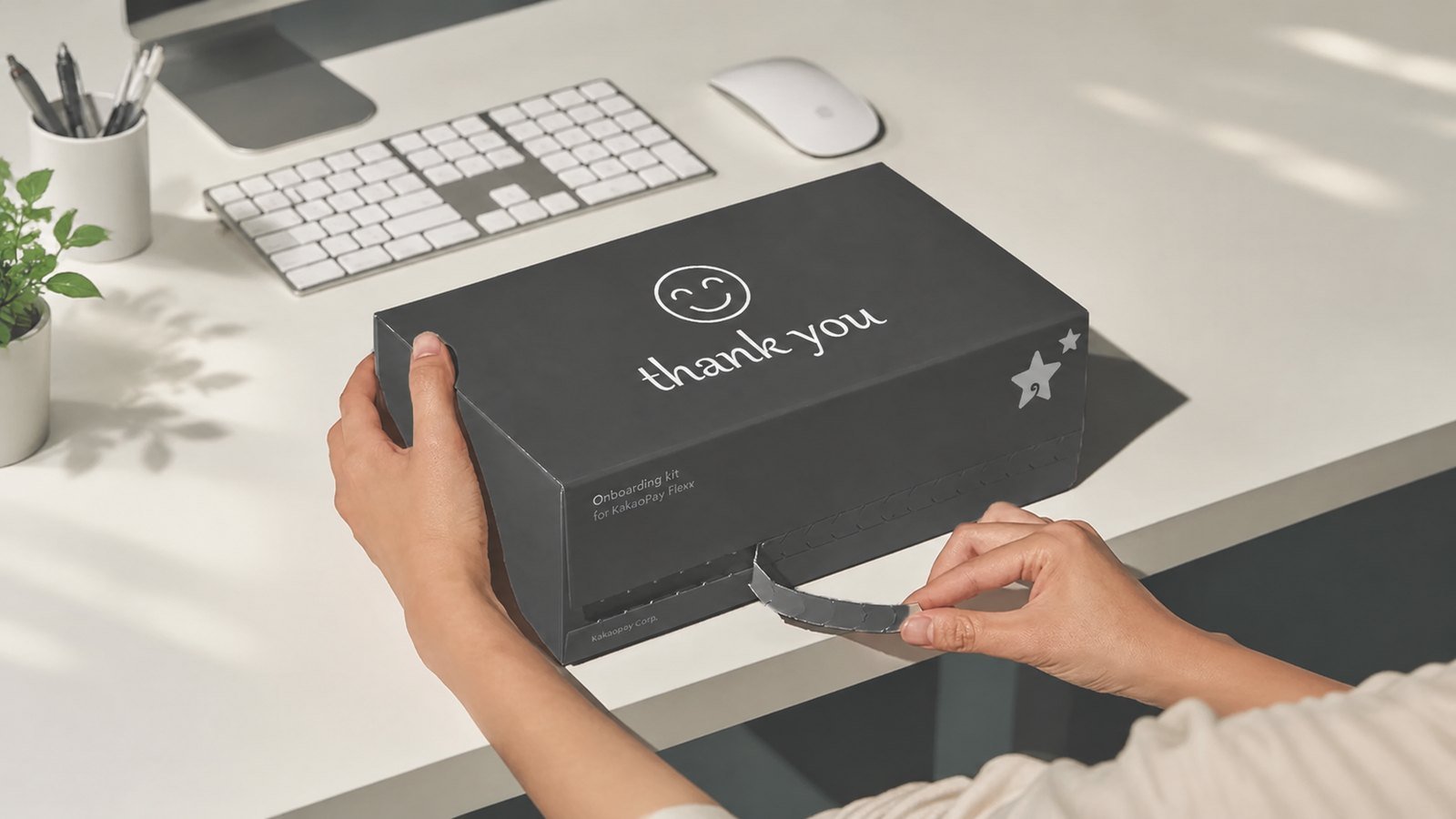
| Tear-strip / zipper mailer | Peel-and-seal adhesive + perforated tear strip | Tamper-evident, fast sealing, easy opening | Single use; extra converting cost | High-volume e-commerce, returns-free shipping |
| Mailer with ear locks / dust flaps | Side ears lock into lid | Extra dust protection, firmer closure | Slightly slower to fold | Cosmetics, food-adjacent items |
| Two-piece telescope (lid + base) | Separate lid slides over base | Premium “lift-off” reveal | Two components, more board | PR kits, gift sets |
| Double-tuck / double-sided mailer | Tucks on both ends | Higher wall strength | Larger blank, higher cost | Heavier items |
5. Step 3 — Size It Correctly (The Most Expensive Mistake)
Wrong sizing is the No. 1 cause of re-orders. A box that is too big lets the product move and increases dimensional-weight charges; a box that is too tight crushes corners and won’t close cleanly.
How to specify dimensions:
- Always quote internal dimensions in the order Length × Width × Depth (L = longest side of the opening, W = shorter side, D = depth).
- Measure the packed item, not the bare product — include tissue, inserts, cards and protective sleeves.
- Add a clearance allowance: around 2–3 mm per side for snug fits with E-flute; more if the product is irregular or if you use a padded insert. Your supplier should confirm the final allowance on the dieline.
- Remember board thickness — external size = internal size + roughly 2× caliper per dimension (more for rolled-end walls). This matters for carrier size bands.
- Check the courier’s dimensional weight — many carriers bill the greater of actual weight and volumetric weight (L × W × H ÷ a divisor set by the carrier). A few millimetres can push you into a higher band.
| Common mistake | What happens | Fix |
|---|---|---|
| Sending external dimensions | Product doesn’t fit | State “internal dimensions” on every RFQ |
| Measuring product without packaging | Lid bulges, won’t tuck | Measure the fully packed item |
| Too much free space | Product rattles, damage, higher shipping | Reduce size or add an insert |
| Ignoring rolled-wall thickness | Inner width smaller than expected | Ask for a structural sample before mass production |
6. Step 4 — Printing Methods and Finishes
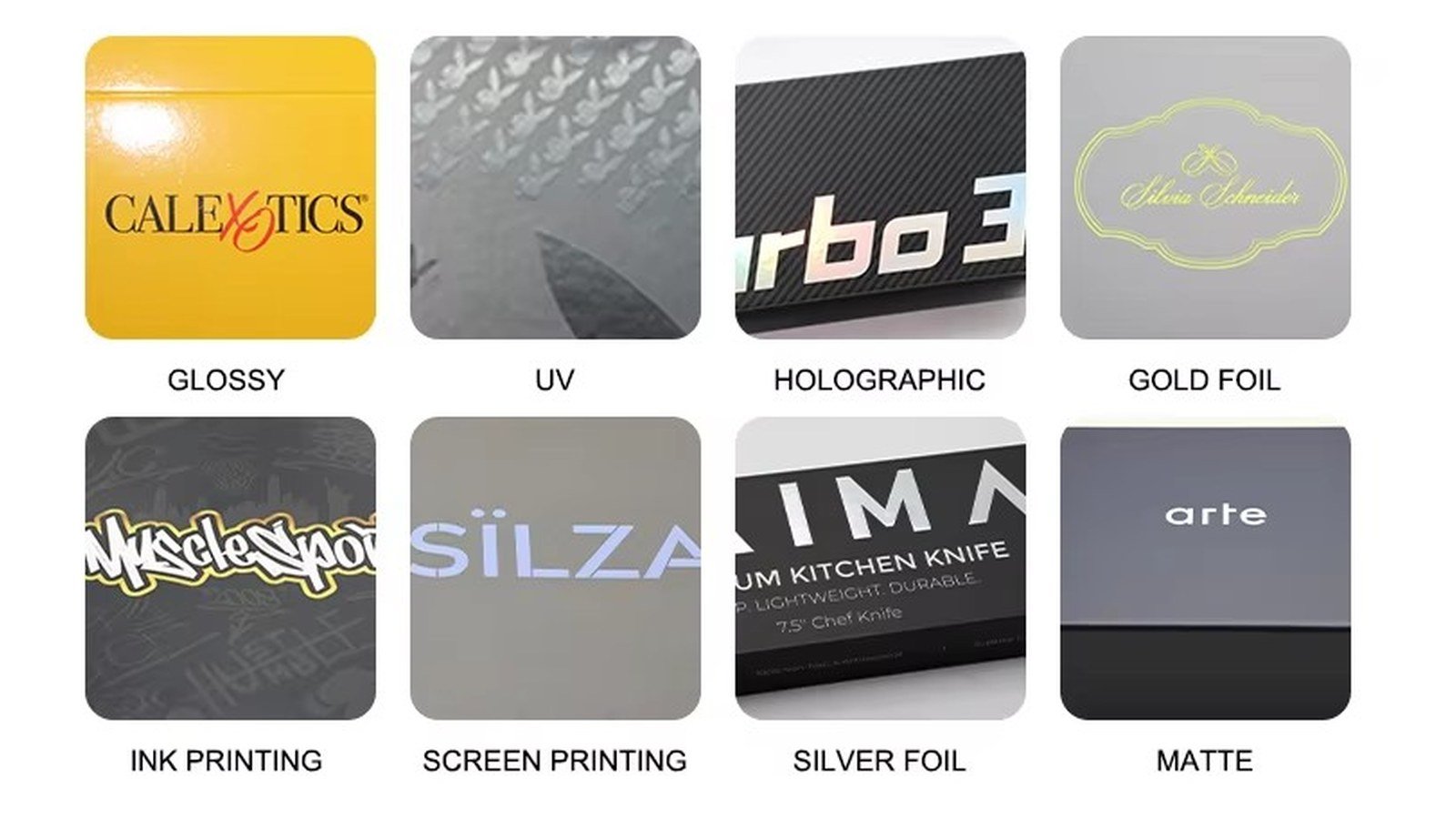
6.1 Printing methods
| Method | Quality | Economical order size | Colour accuracy | Typical use |
|---|---|---|---|---|
| Flexo (direct print) | Medium — best for solid colours and simple logos | Large runs | Pantone spot colours | Kraft mailers, 1–2 colour branding |
| Offset litho + lamination (litho-lam) | Highest — photographic images, fine gradients | Medium to large runs | CMYK + Pantone | Premium full-colour mailers |
| Digital print | High | Short runs, prototypes, multiple SKUs | CMYK | Launches, seasonal or personalised runs |
6.2 Finishes and what they actually do
| Finish | Effect | Recyclability note | Best paired with |
|---|---|---|---|
| Matte / gloss varnish (aqueous) | Light protection, controls sheen | Recycles easily | Most designs |
| Matte / gloss lamination (film) | Scuff resistance, rich colour | Plastic film can complicate recycling | Dark, full-coverage designs |
| Soft-touch lamination | Velvety, premium hand-feel | Plastic film | Beauty, luxury |
| Spot UV | Glossy highlight on a matte base | Generally recyclable | Logos, patterns |
| Hot foil stamping | Metallic gold, silver, rose-gold | Small areas usually acceptable | Logos on dark backgrounds |
| Holographic foil | Rainbow, light-shifting metallic effect | Small areas usually acceptable | Tech, youth and streetwear brands |
| Screen printing | Thick, opaque ink layer; white ink on dark board | Recycles easily | Bold logos on black or kraft board |
| Embossing / debossing | Raised or recessed texture | Recycles easily | White or kraft minimal designs |
6.3 Artwork rules that prevent delays
- Supply vector files (AI/PDF) on the supplier’s dieline, with fonts outlined.
- Use CMYK for process colours and specify Pantone codes for brand colours.
- Keep 3 mm bleed beyond cut lines and keep text ≥3 mm inside fold and cut lines.
- Remember the inside print sits upside-down relative to the outside on many dielines — check orientation on the 3D proof.
- Approve a physical or digital proof before production; colour on screen ≠ colour on board.
7. Step 5 — Inserts and Protection
A good insert often protects better — and cheaper — than upgrading the whole box to double-wall.
| Insert type | Protection level | Look | Sustainability |
|---|---|---|---|
| Corrugated die-cut insert | Medium–high | Clean, functional | Fully recyclable |
| Paperboard insert | Light–medium | Premium, printable | Fully recyclable |
| Molded pulp tray | High | Natural, eco | Recyclable / compostable (check local rules) |
| EVA / PE foam | Very high | Premium, precise | Harder to recycle |
| Tissue + crinkle paper | Light (void fill) | Gift-like | Recyclable |
8. What Drives the Unit Price
You can usually lower cost by 15–30% through structure and spec choices without changing the look. The biggest levers:
- Quantity — set-up costs (plates, die, make-ready) are spread over more units. At GLY the MOQ is 1,000 pcs per design.
- Box size and blank yield — how many blanks fit on one sheet.
- Board — E-flute single wall vs. double wall; kraft vs. white liner.
- Print coverage and method — 1-colour flexo < digital < full litho-lam.
- Inside printing — adds a print pass.
- Finishes — each foil, emboss or spot UV adds a process and often a tool.
- Tear strip / adhesive — extra converting step.
- Inserts — a separate component with its own tooling.
Where to spend and where to save: spend on the first thing the customer sees — inside lid print or one foil logo. Save on invisible upgrades such as over-specified board.
9. From Artwork to Delivery: The Production Timeline
- 01RFQ & specs
- 02Dieline & 3D proof
- 03Physical sample
- 04Approval
- 05Mass production
- 06QC
- 07Shipping
| Stage | What you provide | What you receive | Time at GLY |
|---|---|---|---|
| 1. RFQ | Packed product size and weight, quantity, print idea, target market | Quote and recommended spec | — |
| 2. Dieline | Confirmed internal dimensions | Flat dieline and 3D mock-up | — |
| 3. Sample | Artwork on dieline | Plain structural sample and/or printed sample | 3–5 days |
| 4. Mass production | Signed approval of the pre-production sample | Printed, die-cut, QC-checked boxes shipped flat | 12–15 days after sample approval |
Planning tip: add sample approval time and shipping transit to the production days. For a launch date, count backwards from the day the boxes must be in your warehouse.
10. Pre-Order Checklist
Copy this list into your RFQ:
- ☐ Internal dimensions (L × W × D) of the packed product
- ☐ Packed weight and fragility level
- ☐ Shipping method: single parcel, pallet, export container
- ☐ Flute and grade (or ask the supplier to recommend one)
- ☐ Outside liner: kraft or white
- ☐ Structure: RETF, tear strip, telescope, etc.
- ☐ Print: outside / inside, number of colours, Pantone codes
- ☐ Finishes: lamination, foil, emboss, spot UV
- ☐ Insert required? Type and number of cavities
- ☐ Quantity per design and number of SKUs
- ☐ Required certifications (e.g. FSC paper) and target delivery date
11. Why Brands Work with GLY Packaging
| What you need | What GLY offers |
|---|---|
| Low entry quantity | MOQ 1,000 pcs per design |
| Fast sampling | 3–5 days for samples |
| Reliable lead time | 12–15 days mass production after pre-production sample approval |
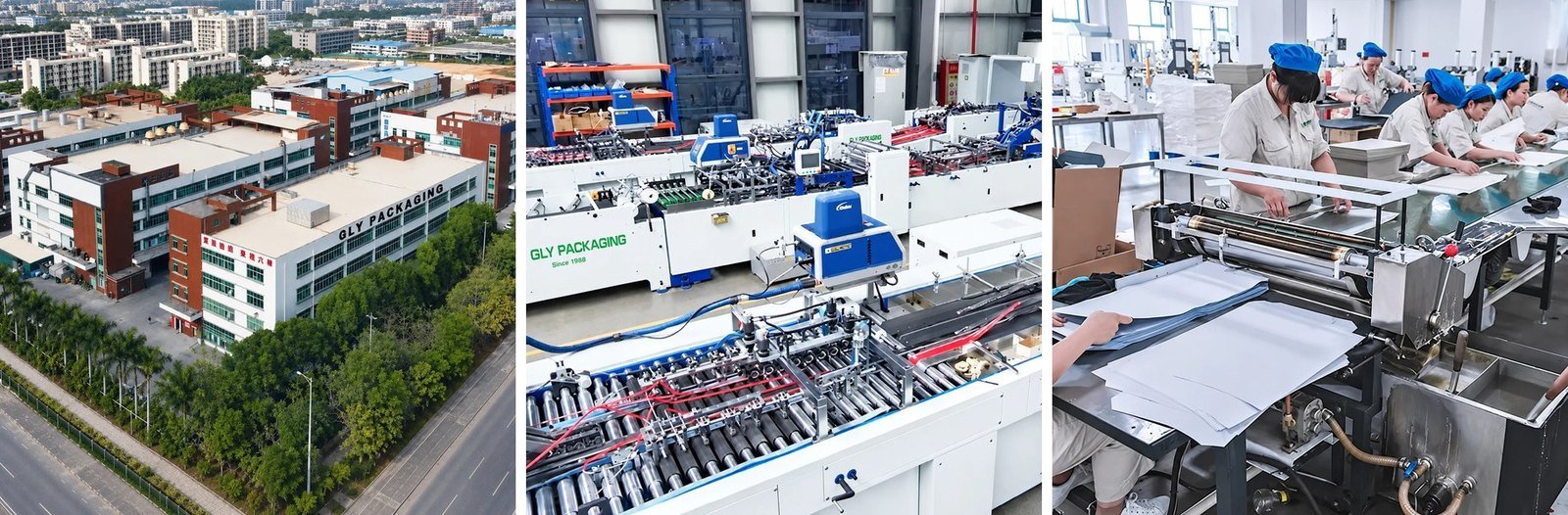
| Production capacity | 40,000 m² factory |
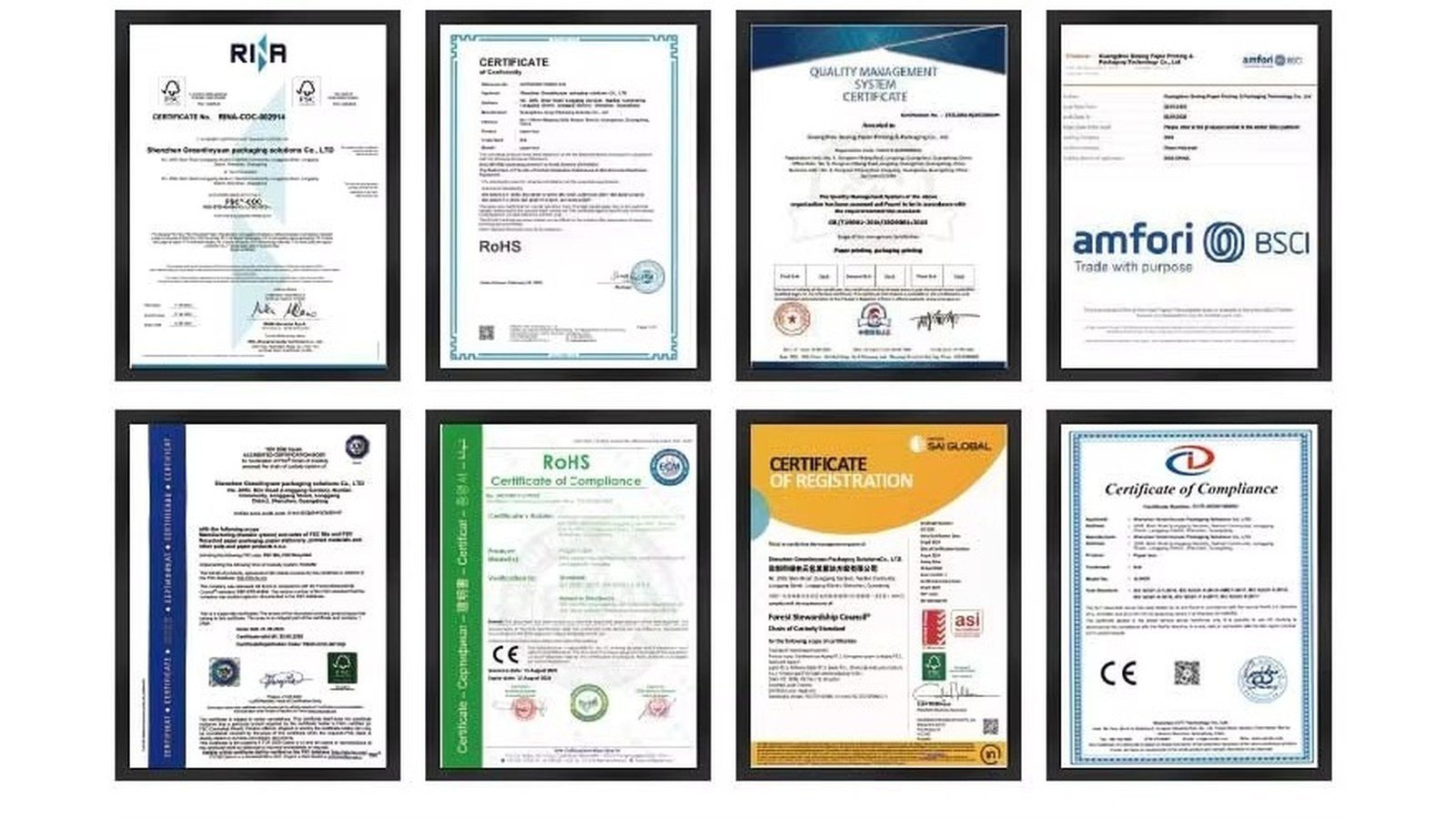
| Compliance documents | FSC, BSCI, ISO 9001, CE, MSDS |
| One supplier for the whole range | Mailer boxes, rigid gift boxes, corrugated boxes, gift bags and product boxes |

12. FAQ
What is the best flute for custom mailer boxes? E-flute is the industry default: thin enough for sharp printing and clean folds, strong enough for most products under 5 kg. Use B-flute for heavier or fragile items and F-flute for slim premium boxes.
Can mailer boxes be shipped without an outer carton? Yes. Mailer boxes are designed to travel through parcel networks on their own. Choose the board grade based on packed weight and stacking conditions.
Is it worth printing the inside of a mailer box? For DTC brands, usually yes. The inside lid is the first branded surface your customer sees after opening, and it is the area most often shown in unboxing photos and videos.
Are custom mailer boxes recyclable? Corrugated board is widely recyclable. To keep it that way, prefer aqueous varnish over plastic film lamination, and use paper-based inserts instead of foam.
What’s the difference between E-flute and B-flute? E-flute is about 1.5–2 mm thick with fine flutes for better print and a slimmer profile; B-flute is about 2.5 mm thick with more cushioning and puncture resistance.
What is the minimum order quantity for custom mailer boxes? At GLY Packaging the MOQ is 1,000 pcs per design.
How long does it take to get custom mailer boxes? Samples take 3–5 days. Mass production takes 12–15 days after you approve the pre-production sample, plus shipping time to your location.
How do I avoid colour differences between my screen and the printed box? Specify Pantone codes for brand colours, and approve a printed sample on the actual board — kraft and white liners reproduce the same ink very differently.
Ready to Build Your Mailer Box?
GLY Packaging manufactures custom mailer boxes, rigid gift boxes, corrugated shipping boxes, gift bags and product boxes in a 40,000 m² factory certified to FSC, BSCI, ISO 9001, CE and MSDS. Send us your packed product size and quantity (from 1,000 pcs per design), and our team will recommend the board, structure and finish, then return a dieline and 3D proof. Samples are ready in 3–5 days.
Get a free quote → · Try our 3D mailer box designer to preview your artwork inside and out.
Ready to upgrade your packaging?
Get a free quote and a practical packaging recommendation within 24 hours.