Pizza Packaging Buyer Guide
10-Inch Pizza Box Size Guide: Buyer’s Specification Checklist
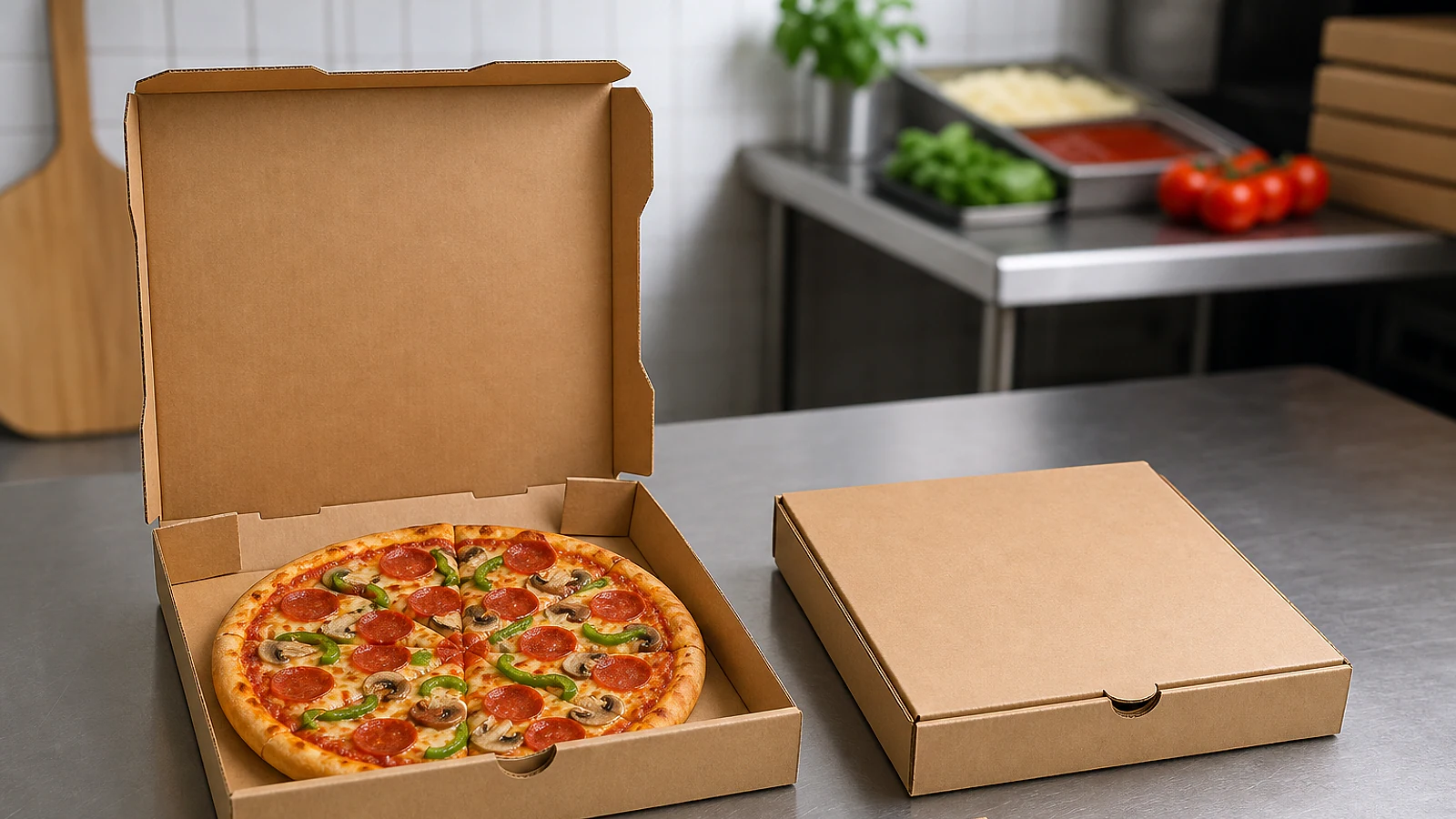
A “10-inch pizza box” is not a complete specification. Buyers must define whether the number describes the pizza, the finished inside box, or the outside panel—and then prove that the assembled box protects the real product through service and delivery.
What does “10-inch pizza box size” actually mean?
The phrase can refer to three different things: a pizza sold as 10 inches, a box with a nominal 10-inch footprint, or a finished box whose measured internal cavity is close to 10 inches. Those meanings are not automatically interchangeable. Board thickness, folds, locking tabs and manufacturing tolerance can make the usable internal space smaller than the flat die-line suggests.
For purchasing, write dimensions as length × width × height and identify each set as finished inside, finished outside or flat blank. The inside dimensions control food clearance. The outside dimensions affect thermal bags, delivery racks, storage shelves, master cartons and pallet utilization. The blank size affects board yield and shipping volume before assembly.
Start with the finished pizza, not the menu name
A pizza marketed as 10 inches may not finish at one exact diameter every time. Dough relaxation, hand stretching, pan geometry and oven behavior create variation. Measure a useful sample from normal production, including the widest acceptable crust, and record the largest repeatable diameter rather than a single ideal example.
Height matters too. A thin base with low toppings has a different clearance requirement from a deep-pan product, raised crust, folded edge, pizza saver or tall garnish. Check the highest point after baking and during the actual closing step. If the lid touches cheese or toppings, appearance and food condition can fail even when the footprint looks correct.
Food measurements
Record maximum finished diameter, maximum height, temperature at packing, grease level, crust style, topping movement and whether a liner or support is used.
Service measurements
Record target hold time, delivery distance, stack count, thermal-bag opening, shelf width, assembly time and the number of sizes staff handle.
A practical clearance method for a 10-inch pizza
Do not apply one universal allowance to every menu. Begin with the largest finished diameter and decide how much side clearance is required for loading, removal and movement control. Too little clearance can rub the crust, pinch toppings or slow staff. Too much clearance can let the pizza slide, rotate and strike the walls during braking or turns.
Build trial boxes around the real product and compare at least two internal footprints when the correct allowance is uncertain. Observe whether staff can load the pizza without tilting it, whether customers can lift a slice, and whether the product shifts on the normal route. The chosen clearance should be a documented result, not a copied number from an unrelated supplier catalogue.
Inside, outside and manufacturing dimensions
| Dimension | Why the buyer needs it | How to approve it |
|---|---|---|
| Finished inside length and width | Controls crust clearance, loading and side movement. | Measure an assembled box at defined points and test the largest normal pizza. |
| Finished inside height | Protects toppings and any pizza saver or insert. | Close the lid over the tallest normal product and inspect contact after stacking. |
| Finished outside dimensions | Controls thermal-bag, rack, shelf, carton and delivery-vehicle compatibility. | Measure the assembled box and the widest locking or folded area. |
| Die-line and blank dimensions | Affects artwork, tooling, board yield and flat-pack shipping. | Approve a revision-controlled die-line after the structure is frozen. |
| Dimensional tolerance | Defines acceptable variation between boxes and production lots. | Agree measurement method, sample quantity and acceptance limits in writing. |
Choose the box height around crust and toppings
Nominal footprint attracts most attention, but height causes many practical complaints. A shallow box may touch the food, bow upward or release its front lock. An unnecessarily tall box increases air space, carton volume and storage demand and may reduce stack stability. Choose the lowest height that protects the tallest approved product with controlled clearance.
Test any support, liner or corrugated insert as part of the assembled system. If the restaurant uses one box for flatbread, pizza and baked snacks, test every item that sets a different height or load condition. A box approved only with a plain cheese pizza may not protect a heavily topped premium menu item.
Board construction: paperboard or corrugated?
Structure should follow the heat, grease, hold time and stack load. Folding paperboard can suit light, short-hold applications when the design and material are validated. Corrugated construction adds fluting between liners, which can improve stiffness and insulation, but performance depends on board combination, paper strength, moisture exposure, flute profile and converting quality—not simply the word “corrugated.”
Ask the supplier to identify the board construction and important performance targets instead of relying only on color or basis weight. Kraft and white surfaces affect appearance and printing, but surface color does not prove food-contact suitability, grease resistance or compression performance. Review the supporting evidence described in the food-grade paper packaging checklist.
Flute choice, stiffness and storage space
A finer flute can provide a smoother print surface and lower profile, while a larger flute can create a different balance of cushioning, stiffness and thickness. The most suitable option depends on box span, stack load, delivery route and print expectations. Compare supplier proposals using assembled samples produced from the proposed material combination.
Also evaluate flat-pack behavior. Pizzerias consume many boxes and often store bundles near the make line. Measure bundle height, units per bundle, master-carton dimensions and the space required for one reorder cycle. A structure that performs well after assembly can still create an expensive operating problem if its flat-packed inventory does not fit the site.
Ventilation: balance steam release and heat retention
Hot pizza releases moisture after closing. If steam stays trapped, the crust and lower surface can soften. If the package vents too aggressively, the product may cool faster and openings may influence panel strength or contamination protection. Vent design is therefore a controlled trade-off, not a decorative detail.
Run matched trials with the same pizza, pack temperature, hold time and route. Compare an unvented sample with one or more vent patterns. Check crust texture, visible condensation, box stiffness, external grease marks and product temperature at the intended handover time. Keep the chosen number, shape and location of openings on the approved die-line.
Grease and moisture resistance
Oil and condensed water can soften fibers, stain outer panels and reduce stacking strength. Test the bottom panel, corners and score lines because failure may begin where liquid collects or folds disrupt the surface. Use the greasiest normal menu item and the longest realistic hold time, not a dry room-temperature substitute.
A liner or greaseproof food paper can be evaluated when separation, presentation or cleanup requires it. Treat the liner and box as one packaging system: confirm size, migration or food-contact documents, folding method and whether the liner blocks intended vents.
Assembly and closure checks for busy service
Pizza boxes are commonly supplied flat, so assembly time and lock reliability affect labor and order speed. Ask several staff members to build samples using the real workstation. Count the steps, note any panels that catch, and verify that tabs remain engaged without crushing the board.
The front lock should close predictably and reopen without tearing when customers access the food. Side walls should remain upright, corners should not spring apart, and the lid should sit flat. If staff need excessive force or different techniques, investigate score depth, die-cut accuracy, board direction and dimensional tolerance before mass production.
Delivery and stack testing
- Standardize the product. Use pizzas from the same recipe and production window, packed at a recorded temperature and time.
- Build the normal order. Include the actual box, liner, pizza saver, condiments and thermal bag used by the operation.
- Run the realistic route. Test the longest common hold time with normal walking, vehicle vibration, turns, braking and handover.
- Test the expected stack. Place the normal maximum number of loaded boxes in the same orientation used in delivery.
- Inspect at handover. Record lid contact, corner damage, collapse, sliding, condensation, grease marks, temperature and crust condition.
- Repeat before approval. One successful sample is not enough to establish consistency. Repeat with multiple boxes and a production-representative lot.
Use a pass/fail scorecard
| Checkpoint | Pass condition | Typical failure signal |
|---|---|---|
| Food fit | Pizza loads and lifts without rubbing or uncontrolled sliding. | Crushed crust, topping contact or excessive movement. |
| Lid clearance | No contact with the highest normal topping after closing and stacking. | Cheese transfer, bowed lid or released front lock. |
| Structure | Walls, corners and base remain stable through the route. | Corner opening, base sagging or panel collapse. |
| Moisture control | Acceptable crust texture with no damaging condensation. | Soggy base, wet board or excessive heat loss. |
| Grease control | No unacceptable soak-through, staining or strength loss. | Dark outer marks, softened scores or residue leakage. |
| Workflow | Staff assemble and close the box consistently at target speed. | Mislocked tabs, rework or excessive force. |
| Delivery compatibility | Box fits the bag, rack and stack without deformation. | Bag interference, tilted stack or compressed top boxes. |
Printing and artwork on a pizza-box die-line
Reserve important logos, ordering information and product identifiers for panels that remain flat and visible after assembly. Avoid placing essential copy through scores, tabs, vent cuts or areas that staff cover during closing. Confirm the print side, color targets, ink system, registration tolerance and treatment of kraft or white liner differences.
Approve structure before final artwork. A change in footprint, height, lock or vent location changes the die-line and can move graphics. For multi-size programs, use a controlled artwork family with a clear size mark so staff can distinguish boxes quickly. The custom branded food packaging route can help connect dieline, print and export packing requirements.
MOQ, packing and landed-cost questions
Request the minimum order quantity for the exact size, board, printing and finish. A plain stock box MOQ does not establish the MOQ for a custom printed version. Separate one-time tooling or plate charges from recurring unit cost, and confirm allowed overrun or underrun.
Ask for units per bundle, bundles per master carton, carton dimensions, gross weight and pallet plan. These figures affect freight, receiving, storage and replenishment. Compare landed cost per usable box, including damage and assembly waste, rather than only factory unit price. If several sizes share one program, calculate demand and safety stock by size so a slow item does not force unnecessary inventory across the whole range.
Pizza-box RFQ checklist
- Finished pizza diameter range, maximum height, crust style and topping profile.
- Required finished inside and outside length × width × height, with tolerances.
- Board type, liner color, flute or paperboard construction and performance targets.
- Pack temperature, expected hold time, maximum stack and delivery route.
- Vent number, size and location; liner, insert or pizza-saver requirements.
- Food-contact, material and market documentation required for the destination.
- Print colors, coverage, finish, artwork format and color-reference method.
- Quantity by size, forecast, MOQ, bundle and master-carton configuration.
- Destination, shipping term, requested sample stage and target delivery date.
Send this information through the packaging RFQ form. Buyers comparing a wider range can also review custom food delivery boxes, food packaging boxes and takeaway restaurant packaging.
Receiving inspection and repeat-order control
Define a practical incoming inspection before the first shipment arrives. Check carton labels and item codes, then sample boxes from more than one bundle and more than one position in the load. Assemble them using the normal staff method and record finished inside dimensions, closure behavior, board appearance, print position, vent cuts, odor, contamination, warping and visible damage. Compare the lot with the approved specification and golden sample rather than relying only on the purchase-order description.
For repeat orders, require written approval before changes to paper source, liner color, flute, adhesive, coating, ink, die-line, vent pattern, packing or production location. Even when nominal dimensions remain the same, a material or converting change can alter stiffness, assembly force, heat and moisture behavior. Keep batch codes, inspection photos, complaints and corrective actions linked to the order so purchasing can identify whether a service problem came from food variation, handling or packaging variation.
Supplier warning signs
Be cautious when a quotation states only “10-inch pizza box” without distinguishing inside and outside dimensions; when board construction, print revision or vent pattern is missing; or when a supplier will not provide an assembled sample. Other warnings include artwork approval before structure approval, unclear packing figures, no tolerance method, and substitution of board or liner without written change control.
A reliable order record links item code, finished dimensions, die-line revision, material combination, print version, packing specification and approved sample. Retain those records with inspection photos and test results so repeat orders can be compared against the same target.
Frequently asked questions
Is a 10-inch pizza box exactly 10 × 10 inches?
Not necessarily. Some sellers name the box by a nominal pizza size, while others publish finished inside or outside dimensions. State which dimensions control the order and approve an assembled sample.
Will every 10-inch pizza fit a 10-inch box?
No. The baked crust may finish wider than the menu name, and a tight box can rub the rim or toppings. Measure the largest normal finished pizza and test the intended clearance and box height.
Should pizza-box dimensions be quoted as inside or outside dimensions?
Finished inside dimensions are most useful for food fit. Outside dimensions are also needed for thermal bags, shelving, cartons and pallet planning. Record both on the approved specification.
How high should a box for a 10-inch pizza be?
Height depends on crust, toppings, supports and stacking. A thin pizza may need less headroom than a thick or heavily topped product. Approve height with the tallest normal menu item, not an empty box.
Are more ventilation holes always better?
No. Venting can release moisture, but excessive openings may accelerate heat loss or reduce panel strength. Compare controlled vent patterns with the actual pizza and delivery time.
What sample should a wholesale buyer approve?
Approve an assembled structural sample first, then a printed or production-representative sample when color, coating, board and converting are important. Retain the signed specification and a golden sample.
What details belong in a pizza-box RFQ?
Include finished pizza diameter and height, required inside and outside box dimensions, board and flute preference, vent pattern, food-contact requirements, print coverage, quantity by size, packing, destination and delivery schedule.
Specify your pizza box before requesting price
Share the finished pizza dimensions, box size, board preference, vent pattern, printing, quantity, destination and delivery test requirements. GLY PACKAGING can help narrow the structure and prepare a sampling route for custom takeaway programs.