Coffee Shop Treat Program Guide
Pup Cup Packaging for Coffee Shops: Size, Safety & Service Guide
A pup cup can create a memorable cafe moment, but the program needs more than a tiny branded cup. Buyers should control the approved recipe, portion, material, rim, lid, staff workflow, owner-facing information, samples and wholesale specification as one system.
What a pup cup program is
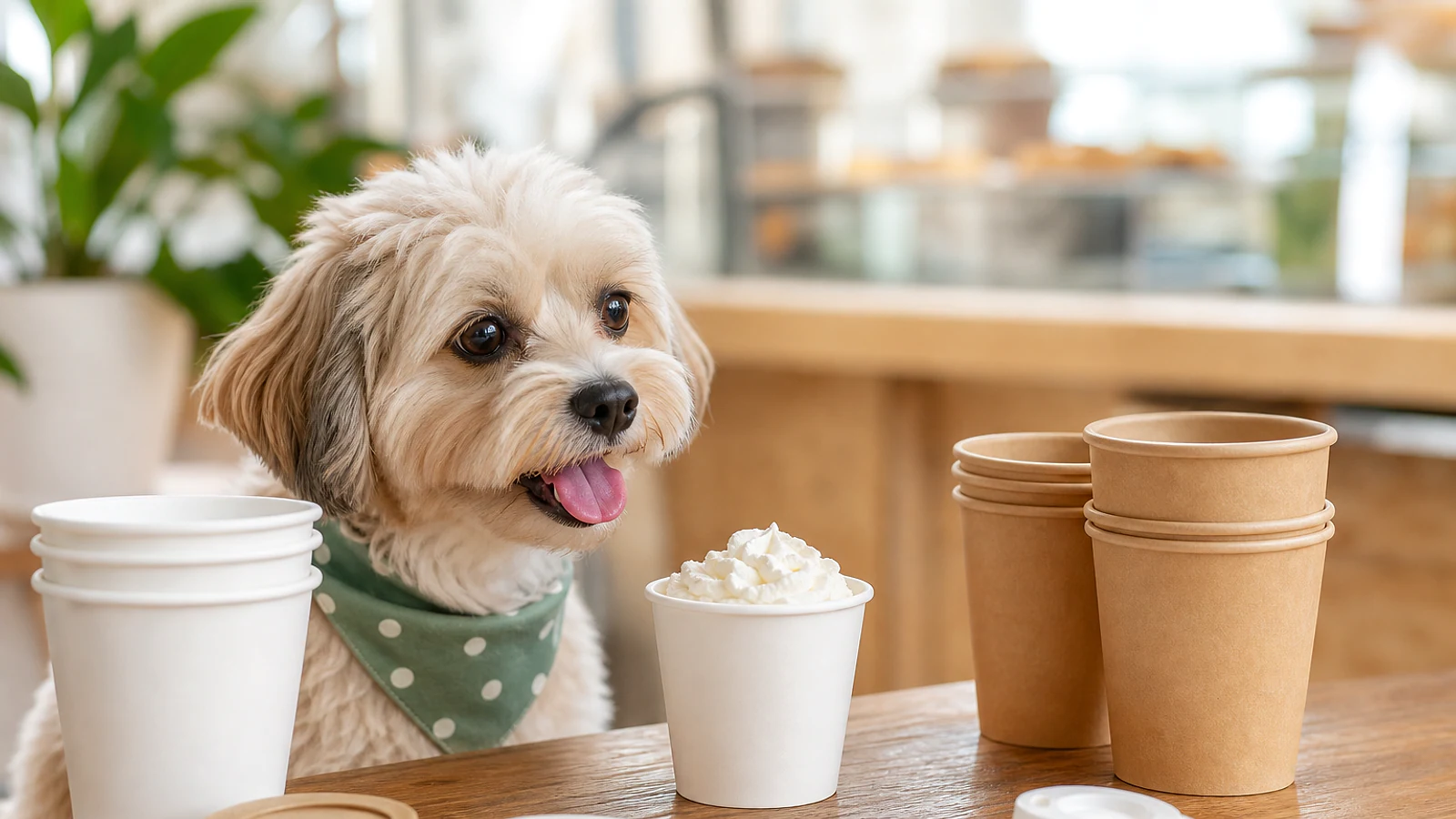
A pup cup is a small treat portion offered by a cafe or foodservice business to a customer’s dog. The name describes a service idea, not a standardized recipe, nutrition claim or package size. One business may use a chilled prepared treat, another may use an approved packaged dog treat, and another may decide not to offer the item at all.
For packaging buyers, the useful question is how the approved treat moves from storage to portioning, handoff and disposal. The cup should support the measured serving, remain stable during filling, carry the required owner-facing information and fit the cafe’s hygiene and stock-control process.
Separate recipe approval from packaging approval
Create two controlled files. The recipe file identifies the product name, every ingredient and supplier, approved portion, preparation, storage, time and temperature, customer information and responsible reviewer. The packaging file identifies the cup, optional lid, label, dimensions, material, coating, print, carton, food-contact records and acceptance tests.
This separation prevents a packaging supplier from appearing to approve a pet recipe and prevents an ingredient change from passing unnoticed because the cup did not change. If the recipe, supplier, preparation or serving method changes, the business should repeat the relevant safety and packaging review.
Treat xylitol as a hard ingredient-control issue
The U.S. Food and Drug Administration warns that xylitol is toxic to dogs. It can appear in sugar-free foods and products under names such as xylitol, wood sugar, birch sugar or birch bark extract. A cafe should not infer that a sugar-free topping, syrup, nut butter or dessert component is suitable for a pet.
Build a written ingredient-screening step into purchasing and recipe change control. Check current labels and specifications rather than relying on brand memory. If there is any uncertainty about an ingredient or a dog’s condition, staff should not improvise advice; the owner should be directed to a veterinarian.
Map human-food allergens and shared surfaces
Milk, nuts, eggs and other ingredients may be present in cafe recipes, toppings and shared preparation areas. FDA identifies prevention of allergen cross-contact as an important retail food-safety issue. The pup cup workflow therefore needs to fit the business’s existing allergen plan rather than operate as an informal extra.
Define where the treat is stored, which utensils and dispensers are used, how surfaces are cleaned and what information staff give customers. The human allergen question and the individual dog’s dietary needs are not the same, but both require accurate ingredients, controlled tools and no casual health promises.
Use clean, dedicated portioning tools
FDA pet-treat handling guidance emphasizes clean hands and clean measuring utensils. In a cafe, that principle translates into a documented scoop, spoon or dispenser for the approved recipe, with cleaning and storage steps that match the food-safety plan. Do not use the service cup itself as an uncontrolled scoop.
Position the cups, utensil and recipe container so that staff can complete the task without reaching across open beverages or food. If the program uses a pre-portioned item, define the preparation timestamp, storage location, stock rotation and discard rule. Convenience should not bypass hygiene controls.
Start cup selection with the approved portion
Do not choose the cup by a social-media photo. Weigh the approved serving and place it in several candidate sizes. Measure how much headspace remains, whether the product contacts the rim, whether staff can fill consistently and whether the owner can carry the portion without spillage.
A nominal 2 oz, 3 oz or 4 oz cup describes capacity, not the intended treat weight. Taper and brimful volume vary by supplier. Record the cup SKU, top and bottom diameter, height, usable fill line and target fill weight so that a replacement product cannot be accepted only because it has the same ounce label.
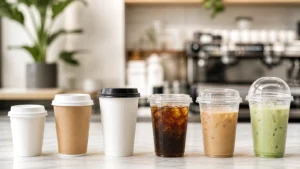
Compare paper, clear plastic and molded fiber by use case
| Format | Potential fit | Buyer checks |
|---|---|---|
| Small paper cup | Branded immediate-service portion with a familiar cafe appearance | Coating, seam, rim, softening, print area, fill temperature and food-contact evidence |
| Paper dessert cup | Cold or semi-solid treat with a wider opening | Usable volume, barrier, spoon access, optional lid and chilled holding route |
| Clear cold cup | Visible layered or branded cold portion where transparency matters | Resin, rim and lid series, crack resistance, condensation and disposal claim |
| Molded-fiber cup | Fiber appearance and a defined molded shape | Surface, odor, rim, barrier, denesting, exact certification and local acceptance |
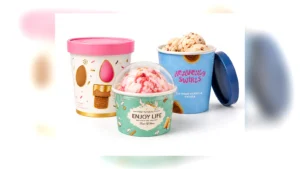
Compare custom paper cups, paper dessert cups, clear PET cold cups and bagasse cups as different constructions. The best choice is the one that passes the approved recipe, workflow and information requirements.
Choose a rim that supports filling and handoff
The top diameter affects access, portion appearance, label space and compatibility with a lid. A very narrow cup may be difficult to fill neatly. A very wide, shallow cup may spill during owner handoff. The rolled rim or molded edge should remain smooth and intact after filling and short holding.
Inspect the rim across multiple samples for flat spots, splits, loose fiber, sharp edges and variation. If staff place a lid on pre-portioned units, test the rim after chilling and after the product has contacted the wall. Fit at room temperature with an empty cup is only the first check.
Control cup stability and base geometry
Small cups have a limited footprint. A tall, narrow format can tip when a dispenser touches the rim or when several items share a crowded handoff counter. Compare base diameter, height, taper and center of gravity with the real fill.
Run a counter simulation on dry and slightly wet surfaces. Place the unit next to the cafe’s normal takeaway cups and bags, then test a short carry by the owner. A cup that looks attractive in a photograph may still create avoidable spills during the busiest service period.
Decide whether a lid belongs in the program
Immediate handoff may work better without a lid, while pre-portioning or takeaway can require a secure closure. Define the exact lid SKU, material, fit and owner instruction. A lid is transport packaging; it should be removed before the animal can access the treat.
If the cafe uses a lid, review paper cup lid options as a matched system rather than ordering by ounce size. Test seating force, retention, leakage, condensation, label adhesion and whether stacked closed cups deform the lower rims.
Keep the owner in the handoff process
Give the item to the owner rather than placing it directly on the floor or presenting it to an animal without permission. The owner decides whether the treat is appropriate for that dog and controls access. The business should provide the approved product information consistently and avoid making veterinary claims.
Use a short staff phrase and an owner-facing cue that the operations and legal teams have approved. If the item must be consumed promptly, supervised, transferred to another dish or kept away from packaging components, communicate that clearly on the label or at handoff.
Design ingredient and handling information before artwork
List the information the program must communicate before placing the logo. Depending on the recipe, market and operating model, this may include product identity, ingredients, allergen information, storage, preparation time, use-by time, owner instruction and a statement that the item is a treat rather than a complete diet.
Regulatory duties vary by market and whether the item is prepared, packaged, sold or given away. Have the final wording reviewed locally. Do not use cute copy to hide critical information, and do not print claims such as healthy, safe for all dogs or veterinarian approved without appropriate evidence and authorization.
Plan a readable custom print area
Small cups offer limited flat space. Keep the brand mark simple, use high contrast and avoid placing essential text in the seam, near the rolled rim or at the bottom where the hand covers it. Request the supplier’s current die line and distortion guidance before final artwork.
A repeatable visual system may use one color band, a paw symbol and a clear product name, but the symbol should not replace words that operations require. Coordinate the item with the broader coffee shop packaging range so that staff can distinguish pet treats from human beverages at a glance.
Use labels when the program needs variable information
A label can carry preparation time, use-by time, ingredient version, store code or staff initials without changing printed-cup inventory. The label material and adhesive must suit the cup surface, temperature and condensation. Test application speed and adhesion after chilled storage.
Place the label where it does not interfere with lid seating or become the owner’s only grip point. If the label has a barcode or QR code, test scanning on the curved surface. Keep a controlled template so that store teams do not create unapproved wording.
Define cold holding and discard controls
If the approved recipe requires refrigeration, specify the preparation location, covered storage, temperature control, batch time and discard point through the cafe’s food-safety process. Packaging should fit the available tray, refrigerator shelf and stock rotation method.
Condensation can loosen labels and soften some paper constructions. Test the complete filled unit through the longest approved chilled hold and counter exposure. A successful five-minute sample does not prove performance after a full service window.
Prevent mix-ups with human orders
A pup cup should be visually and operationally distinct from espresso samples, sauces, children’s portions or dessert toppings. Use a dedicated storage position, cup design, label color or ticket modifier. The point is rapid recognition during a rush, not only brand charm.
Test the system with a mock queue that includes similar small cups. Ask staff to read the ticket, select the cup, portion, label and hand off. Record any step where the wrong cup, utensil, recipe or customer could be selected, then redesign the cue before launch.
Build a simple staff workflow
- Confirm: ask the owner and follow the approved script; never represent the treat as suitable for every dog.
- Select: use the dedicated cup, recipe and clean portioning tool identified in the store procedure.
- Measure: fill to the documented weight or level instead of estimating an oversized serving.
- Identify: add the approved label or mark, including variable information when required.
- Handoff: give the unit to the owner with the approved handling message and keep lids or loose components away from direct pet access.
Time the workflow during a busy simulation. If the item adds too many movements, redesign the storage and label sequence instead of asking staff to remember exceptions. A small treat should not disrupt beverage accuracy or hygiene.
Test the filled cup, not an empty sample
Load the approved recipe at the actual temperature and weight. Inspect the wall, seam, base and rim immediately and at the longest holding time. Check leakage, softening, odor, staining, tipping, label adhesion and owner handling.
Repeat the test across enough units to reveal variation. If a lid is used, include closure, stacking and opening. Photograph failures and record the supplier SKU, lot, recipe, fill weight, temperature and time so that a corrective action can be reproduced.
Check denesting and counter speed
Small cups can stick together when the taper, surface, moisture or packing pressure is not controlled. Ask staff wearing normal gloves to separate and fill units repeatedly. Record double picks, deformed rims and time lost.
Compare stack height and pack count with the available dispenser or shelf. A very compact nest can reduce carton volume yet slow service. Denesting performance belongs in the purchase decision alongside print and unit price.
Verify food-contact documents for the exact cup
Request documents that identify the finished cup, material, coating, ink or label position, intended food type, temperature and conditions of use for the destination market. A generic paper or resin certificate is not a substitute for the ordered construction.
Use the food-contact packaging document checklist to organize supplier, item code, revision, declaration, supporting records and change control. If the treat touches a lid or label, include that component in the review.
Make environmental claims specific and verifiable
Paper, plastic and molded fiber have different recovery routes, and the local system may not accept every small food-soiled item. Do not call the cup recyclable, compostable, biodegradable or plastic-free from appearance alone. Verify the exact construction, certification where relevant and destination-market claim rules.
Give customers an instruction that reflects the real local route. For a broader comparison, use the paper versus plastic cup buyer guide. Operational performance and truthful disposal language are both parts of the specification.
Inspect incoming production lots
An incoming check can cover product weight, top and bottom diameter, height, pack count, rim, seam, base, color, print registration, odor, contamination, deformation and lid fit. Add a short filled-product test at a frequency proportionate to the risk.
Trace cartons to the supplier item, artwork revision, production date or lot and quantity. Require advance notice before changes to board, resin, fiber, coating, ink, adhesive, tooling, facility or subcontractor. Keep an approved reference and retained units from major deliveries.
Compare MOQ and landed cost as a program
Separate the price of plain cups, printed cups, lids, labels, artwork, plates or cylinders, samples, cartons and freight. The minimum for the exact size and artwork matters more than the supplier’s general stock-product minimum. Ask whether several store designs can share a production run without losing traceability.
Calculate cost per successfully served portion. Include overfilling, double cups, stuck units, damaged rims, unused labels, expired pre-portions, carton storage and staff time. A lower unit price can cost more if the cup slows service or creates inconsistent portions.
Measure whether the program helps the cafe
Define a limited pilot period and record units served, waste, preparation time, order value where measurable, repeat participation, customer feedback and staff issues. Do not collect unnecessary personal data. The goal is to learn whether the packaging and workflow support a useful brand experience.
Review incidents and near misses as carefully as positive engagement. If ingredient questions are frequent, improve the information. If lids are unnecessary, remove them. If the cup tips or sticks, change the construction before expanding to more stores.
Send a complete pup cup packaging RFQ
- Approved treat state, fill weight, temperature and holding time
- Target nominal size, usable fill line and cup dimensions
- Paper, plastic or molded-fiber material preference
- Board, resin, fiber, coating, seam and food-contact conditions
- Top and bottom diameter, height, rim and stability requirements
- Optional lid SKU, material, fit and use case
- Print colors, artwork, variable label and readable information zones
- Food-contact evidence and destination-market documentation
- Quantity by design, pack count, carton and storage constraints
- Structural and printed sample stages
- Incoming QC, traceability and change-control requirements
- Destination, target launch date and repeat-order schedule
A clear RFQ allows suppliers to compare suitable existing molds and custom options without guessing the recipe or service route. It also gives purchasing, operations and quality teams one reference for sample approval.
Frequently asked questions
What size cup should a coffee shop use for a pup cup?
Choose from the approved portion, usable fill line, serving method and stability rather than copying a competitor’s ounce label. Test the actual treat in candidate 2 oz, 3 oz, 4 oz or other small formats, and document the final fill weight and cup SKU.
Can a regular paper cup be used as pup cup packaging?
A food-contact paper cup may be a candidate when its size, coating, seam, rim, stiffness and intended conditions match the treat. Verify the exact SKU and documents, then test softening, leakage, rim damage and service handling with the approved recipe.
Does every pup cup need a lid?
No. Immediate handoff may not require one. A lid can help with pre-portioning or takeaway, but it introduces fit, labeling and handling questions. Never let the lid become part of direct pet access; give the closed unit to the owner with clear instructions.
Can a coffee shop use sugar-free ingredients in a pup cup?
Do not assume a human sugar-free ingredient is suitable for dogs. FDA warns that xylitol is toxic to dogs. The recipe and every ingredient should be approved through the business’s veterinary, food-safety and legal process before service.
How should a cafe control allergens in a pup cup program?
Map all ingredients and shared surfaces, use controlled recipes and utensils, train staff, clean according to the food-safety plan and provide accurate customer information. Human food allergen cross-contact and the individual dog’s needs are separate issues that both require care.
What should be printed on a custom pup cup?
Prioritize the brand, product identity, owner-facing handling message, ingredient or allergen information required by the program, disposal instruction and any locally required statement. Keep critical information off the bottom, seam and highly curved areas.
What belongs in a wholesale pup cup RFQ?
Include cup size and dimensions, fill weight, recipe state and temperature, material, coating, rim and lid requirements, print colors, artwork, food-contact documents, quantity, pack count, destination, sample plan, QC limits and launch date.
Build a controlled treat moment, not an improvised extra
A useful pup cup program connects an approved recipe with a measured portion, suitable cup, clear information, clean tools, staff workflow, owner handoff and traceable supply. The package should make those controls easier to follow during real cafe service.
This guide does not approve any ingredient or feeding decision. Recipes, animal needs and legal requirements vary. Consult qualified veterinary, food-safety and legal professionals, follow current official guidance and let the owner decide whether the treat is appropriate for their dog.
Need a small custom cup specification and sample plan?
Send the approved treat format, portion, target cup size, material, lid need, print, label, quantity, destination and launch date. GLY PACKAGING can organize candidate cups, documents, samples, commercial terms and incoming quality questions.