Burger Box Manufacturer Audit: A Buyer’s 100-Point Scorecard
A reliable burger box manufacturer should be able to turn a menu requirement into a controlled specification, prove how the box will be made, and repeat the approved result at production scale. A polished quotation is not enough. Buyers need evidence across structure, materials, printing, samples, quality control and export delivery.
Step 1: give every supplier the same burger-box brief
Supplier comparisons fail when each company quotes a different structure. One may assume a standard clamshell, another a custom die-cut box and another a paper tray with a wrapper. Their prices and minimums cannot be compared fairly. Prepare one written brief before requesting quotations.
Start with the finished burger: maximum diameter or length, total height, weight, toppings, sauce level and whether fries or sides share the package. Add the food temperature at packing, longest delivery or holding time, stacking method and customer opening experience. A tall double burger with moist toppings may need different clearance and ventilation from a compact dine-in burger.
Then define the commercial scope: expected quantity per size and artwork, destination, target arrival date, print coverage and any material or claim requirements. If the structure is still open, ask suppliers to quote a clearly identified standard option and a custom option separately. Buyers can review the available format on the custom printed burger boxes page and compare trays through custom hamburger paper trays.
Step 2: confirm who controls each production process
The word “manufacturer” can describe several business models. One supplier may print, die cut and glue in one facility. Another may purchase printed sheets, outsource a coating or coordinate several specialist plants. Outsourcing is not automatically a problem, but hidden responsibility is.
Ask who purchases the paperboard, approves suppliers, owns the dieline, prepares plates, prints, die cuts, folds or glues, inspects finished boxes and releases export cartons. If a critical process is subcontracted, ask how specifications and changes are communicated, how defects are traced and who has authority to stop production.
| Audit question | Evidence to request | Risk if unclear |
|---|---|---|
| Who is the legal seller and who makes the box? | Company details, production address and named project owner. | Problems are passed between parties with no accountable owner. |
| Which operations are in-house? | Process flow, equipment list or live/video factory walkthrough focused on your product. | Lead time and capability claims may depend on unverified subcontractors. |
| Who owns tooling and print plates? | Written ownership, storage, maintenance and replacement terms. | Unexpected repeat charges or loss of continuity when changing suppliers. |
| How are engineering changes controlled? | Revision code on specification, dieline, artwork and approval records. | Old files enter production after a size or artwork change. |
| How is a complaint investigated? | Example corrective-action format with containment, cause and prevention fields. | The supplier replaces units without preventing recurrence. |
Step 3: audit structure engineering before discussing decoration
A burger box first has to form quickly, close securely and protect the food. Ask the supplier how finished dimensions are measured and which dimensions represent internal usable space. Confirm whether locks, curved walls or board thickness reduce clearance around the burger.
Ventilation deserves a deliberate decision. Too little can trap steam and soften the bun or board; too much can reduce heat retention or expose the product. The correct balance depends on the recipe, temperature and travel time. A supplier should propose a testable configuration rather than claim one vent pattern suits every burger.
Also review how staff handle the box. A design that looks attractive in a dieline may take too long to erect during a rush, reopen after filling or require excessive pressure near the food. Time a small sample batch with the intended workflow and include assembly speed in the approval record.
Step 4: connect material documents to the exact construction
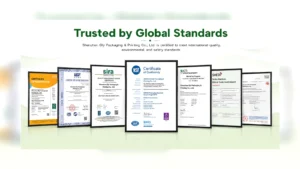
Ask for the paperboard grade, basis weight or caliper, barrier or coating, adhesive, printing ink system and any window or liner. The supplier should state which surfaces contact food and which intended foods, temperatures and contact times the construction covers. A certificate for raw paper alone does not automatically cover the printed and converted box.
For a deeper compliance review, use the food-grade paper packaging buyer checklist. It explains why “kraft,” “water-based” or “FDA approved” cannot replace a component-level regulatory basis and finished-use specification.
Step 5: use a staged sample plan
A staged plan resolves the least expensive questions first. It also shows whether the supplier can maintain revision control instead of sending samples without a clear relationship to the quotation.
- Reference sample: review an existing format to understand board feel, lock style and manufacturing quality.
- Structural white sample: test dimensions, clearance, assembly, closure, stacking and ventilation with the real burger.
- Artwork proof: approve copy, orientation, bleed, safe zones, barcode space and legal or disposal marks.
- Printed sample: review color, register, finish, crease cracking, rub and the appearance of the formed box.
- Production-representative sample: when risk justifies it, confirm material and process behavior close to mass-production conditions.
- Golden sample: sign or otherwise control the final physical reference together with specification and artwork revision.
Every sample should carry an identity: supplier, date, revision, material and size. A beautiful unlabelled sample is weak evidence because it cannot be tied reliably to the final order.
Step 6: run a burger-specific performance test
Fill samples during normal service, using the same burger, wrapping method and staff procedure. Record starting temperature and place the box in the same bag with the same sides, sauces and drinks used in delivery. Hold or transport it for the longest realistic route.
| Check | Pass criteria to define | What a failure may indicate |
|---|---|---|
| Fit and closure | No compression of the product; locks remain closed during handling. | Internal size, board stiffness, crease or lock geometry requires revision. |
| Steam and food condition | Acceptable bun texture and condensation after the target hold time. | Vent area, headspace, wrapping or service route is mismatched. |
| Grease and moisture | No unacceptable strike-through, softening or leakage at agreed checkpoints. | Barrier, seam, board or contact time is unsuitable. |
| Stacking | Boxes retain form under the intended bag or shelf load. | Panel design, material stiffness or fill pattern is insufficient. |
| Print surface | No unacceptable rub, blocking, offset, cracking or transfer to hands. | Ink, varnish, drying, crease position or packing needs control. |
| Customer opening | The box opens cleanly without touching or damaging the burger. | Tab, hinge or opening sequence needs adjustment. |
Use photos and a short result sheet. “Looks good” is not an acceptance criterion. Define which observations are critical, which can be corrected before production and which would cause rejection.
Step 7: review printing, dielines and change control
Ask which print process will be used for the quoted quantity and material. The answer affects color behavior, setup and the way artwork should be prepared. Confirm who checks fonts, images, bleed, trapping, panel orientation and the relationship between artwork and cutting lines.
Brand color should be tied to an agreed target and tolerance appropriate to the process. A screen proof is useful for layout but not a universal color standard. If color is critical, define the physical target, viewing conditions and approval route before production.
Lock the dieline and artwork with revision numbers. Changes after proof approval should trigger a written change notice covering price, tooling, sample needs and schedule. This prevents a “small” panel or size edit from moving text onto a crease or invalidating an earlier fit test.
Step 8: make the quality plan measurable
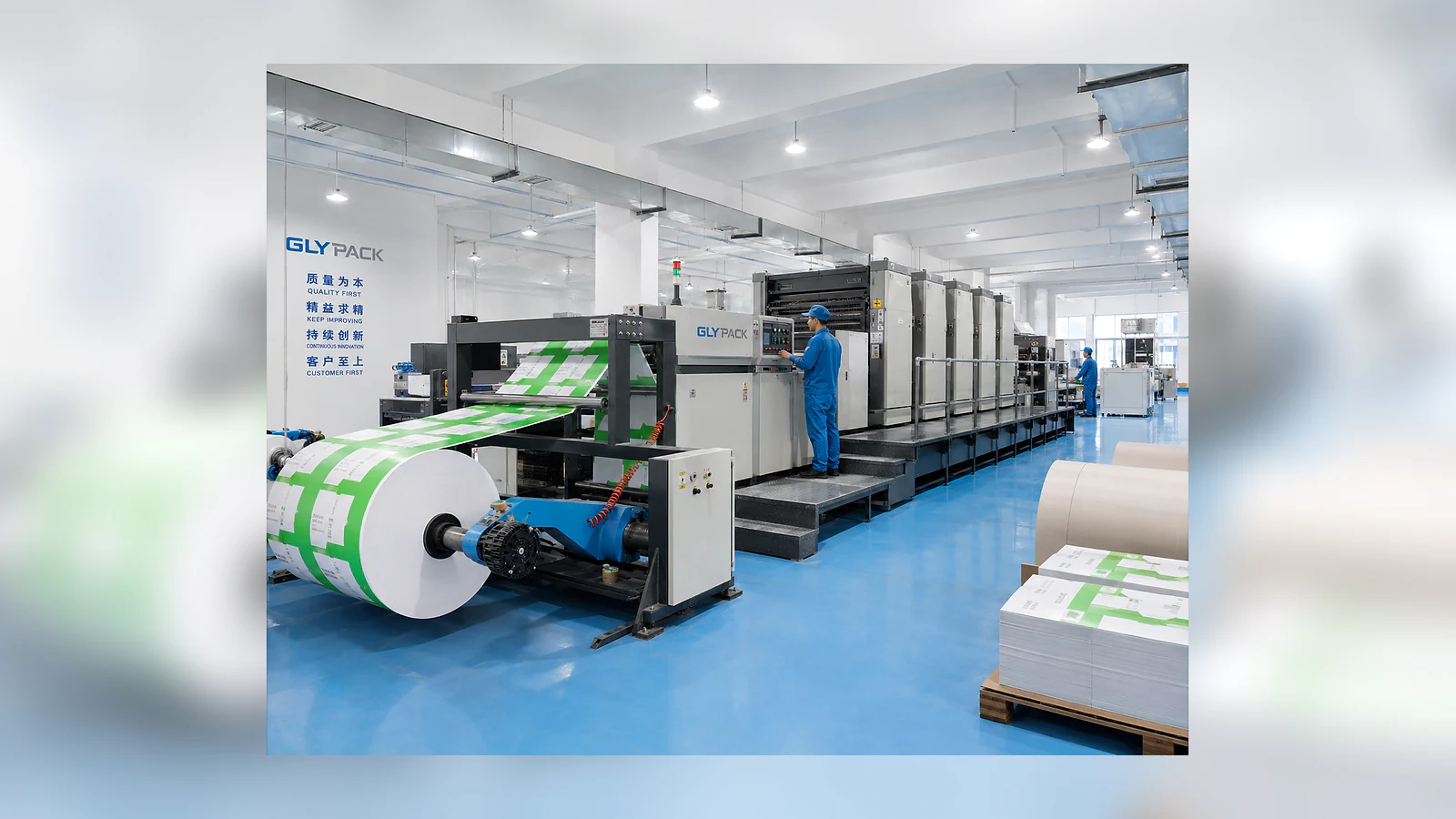
A factory audit should move beyond a list of machines. Ask how incoming paper is identified, how the first printed sheet is approved, how die-cut accuracy is checked, how gluing is monitored and how finished cartons are released. The methods should connect to the approved specification.
Agree measurable items before the purchase order: finished dimensions and tolerance, material identification, color target, print position, lock function, grease performance, carton count and labeling. For inspection, define the sampling approach and what happens when a critical or repeated defect appears. The supplier should be able to isolate affected lots and retain records.
For repeat orders, ask how material, coating, ink, tooling or process changes are approved. A supplier that silently substitutes a “similar” board can change forming, barrier and color even when the artwork file remains identical.
Step 9: separate MOQ, setup and landed cost
MOQ is meaningful only when tied to one size, one material and one artwork. Ask whether designs can be combined, whether each size needs separate tooling, how plates or setup are charged, what overrun or underrun tolerance applies, and how many flat boxes fit in each export carton.
Compare at least two practical quantities. The smallest run may carry high setup cost per unit, while an unnecessarily large run creates storage and artwork-obsolescence risk. Add samples, tooling, plates, unit price, export packing, freight, import charges where applicable, local delivery and inventory holding to the comparison.
Do not treat a factory-ready date as an arrival date. Break the schedule into specification approval, sample production, buyer review, mass production, inspection, packing and shipping. Clarify which dates depend on buyer artwork or feedback.
Step 10: verify export packing and delivery resilience
Flat paper boxes can be damaged by compression, humidity, poor pallet loading or loose carton counts. Ask for export-carton dimensions, gross weight, quantity per carton, internal protection, labels and pallet or container-loading method. Confirm whether mixed sizes or artworks will be clearly separated.
Request photos of packed cartons and shipping marks during the first order. If storage or sea transport is lengthy, discuss moisture management and carton strength. A well-made burger box that arrives warped or crushed is still a failed supply program.
Evaluate continuity as well as one shipment. Ask about raw-material lead time, backup equipment, seasonal capacity, retained tooling and repeat-order records. The broader fast-food packaging solution and custom branded packaging pages can help buyers map burger boxes with trays, cups, wraps and bags before consolidating an order.
100-point scorecard and decision gates
| Category | Weight | Suggested passing evidence |
|---|---|---|
| Structure and fit | 15 | Controlled dieline, dimensions and successful real-burger trial. |
| Material and food-contact evidence | 15 | Exact construction, use conditions and current supporting documents. |
| Sample discipline | 15 | Revision-controlled structural and printed approvals plus golden sample. |
| Process quality | 15 | Written checks, records, traceability and corrective-action process. |
| Printing control | 10 | Defined print method, artwork control, color target and rub criteria. |
| Capacity and lead time | 10 | Realistic milestone schedule and visible capacity or contingency plan. |
| Export packing | 10 | Approved carton specification, labels, counts and loading plan. |
| Commercial clarity | 5 | Separated MOQ, tooling, setup, unit price and freight assumptions. |
| Communication | 5 | Named owner, response plan and controlled specification revisions. |
The total score supports comparison, but critical gates remain pass or fail. A supplier should not compensate for missing food-contact evidence, a failed functional sample or uncontrolled artwork by offering a lower price elsewhere in the scorecard.
RFQ checklist for a burger box manufacturer
Send this information in one package to receive a comparable quotation:
- Burger maximum length, width or diameter, height and filled weight
- Food temperature, grease or moisture level and target hold or delivery time
- Preferred clamshell, tray or other structure and any ventilation requirement
- Paperboard appearance, barrier needs and destination-market food-contact requirements
- Finished dimensions or a request for supplier engineering
- Print colors, coverage, finish, artwork status and brand-color target
- Quantity per size and artwork plus expected reorder frequency
- Required sample stages and inspection expectations
- Destination, delivery term, target arrival date and pallet preference
- Documents and sustainability claims that must be reviewed before artwork approval
Send the audit brief to GLY PACKAGING for a structure, sample and quotation review.
Supplier warning signs
- The quote uses only a product name and unit price, with no material, size, print or packing specification.
- Every question is answered with “no problem” but no sample, document or process evidence follows.
- Food-contact claims cover a broad catalog rather than the exact printed construction and intended use.
- MOQ and lead time change repeatedly because the supplier has not confirmed the production route.
- Artwork files, dielines and samples have no revision identification.
- The supplier will not explain subcontracted processes or who handles a quality complaint.
- Mass production is requested before structural testing and written approval.
Frequently asked questions
Is a factory always better than a trading company?
No. A factory may offer direct process access, while a capable trading or project-management partner may coordinate several processes well. The buyer should know who controls material purchasing, printing, converting, inspection and corrective action.
What sample should a buyer request first?
Start with a structural sample that uses the proposed dimensions or a close material. Test the real burger and service route before paying for a fully printed approval sample.
How should burger box MOQ be compared?
Ask whether the minimum applies per size, per artwork, per material and per production run. Compare tooling, plate or setup charges, carton quantities and landed cost at more than one volume.
Can a digital proof replace a physical sample?
A digital proof can confirm copy and approximate placement, but it cannot prove board stiffness, lock performance, grease resistance, ventilation, print rub or carton packing. Use it as one approval stage, not the only stage.
What is a golden sample?
It is the signed physical reference or clearly controlled production sample used with the approved specification and artwork. It helps purchasing, production and inspection judge whether later units match the agreed result.
Which quality checks matter most for burger boxes?
Dimensions, material specification, crease and lock accuracy, forming, grease performance, ventilation, print position, color tolerance, rub resistance, carton quantity and traceability are common starting points. The final plan should match the box and service use.
How can a buyer reduce first-order risk?
Freeze one specification, test the real food, approve a controlled sample, define written acceptance criteria, inspect production before shipment and avoid combining too many sizes or artwork versions in the first run.
Choose the supplier that can repeat the approved result
The lowest quotation does not create a reliable burger-box program. The stronger supplier is the one that understands the food and service route, converts requirements into one controlled specification, proves the box through samples, and maintains the same material, artwork and process during production.
GLY PACKAGING supports custom structure review, printing, samples, production coordination, quality checks and export packing. Buyers can also review the wider food packaging box range and GLY’s production and quality workflow before preparing an audit or RFQ.
Ready to audit a burger box project?
Send the burger dimensions, food temperature, delivery time, sizes, artwork, quantities and destination. GLY PACKAGING will organize the structure, sample and quotation questions around the real application.