Cup Material Buyer Guide
Paper vs Plastic Cups for Coffee Shops: Buyer’s Use-Case Guide
There is no single winner for every beverage. A useful comparison starts with the real drink and separates paper construction, PET, PP, lids, printing and end-of-life claims instead of treating “paper” and “plastic” as two simple categories.
Paper cups vs plastic cups: quick use-case comparison
| Decision area | Paper cup questions | Plastic cup questions |
|---|---|---|
| Drink temperature | Which wall and barrier are specified for the hot or cold use? | Is the resin and finished cup documented for the intended temperature? |
| Product visibility | Opaque surface emphasizes printing and brand color. | Clear construction can show layers, ice, color and toppings. |
| Condensation | Test outer-paper stiffness and print after cold hold. | Test grip, label or print durability and carrier stability. |
| Hand comfort | Compare single, double or ripple wall and sleeve need. | Test the exact material and temperature; avoid generic assumptions. |
| Closure | Match rim curl and lid family by SKU. | Match rim, lid, dome or flat format and any sealing process. |
| End of life | Check coatings, local collection and processing route. | Check resin, color, labels, contamination and local collection route. |
Start with the beverage portfolio
List every hot and cold drink, its temperature at packing, ice, foam, toppings, acidity, hold time, delivery route and presentation goal. A filter coffee and an iced layered drink should not be forced into one material decision simply to reduce the number of suppliers.
Map each recipe to capacity, usable fill, cup SKU, lid SKU and monthly demand. This exposes where paper may support the hot menu, where a clear cold cup adds merchandising value, and where one validated construction can cover more than one drink. The coffee cup size guide can help align size with recipe before material selection.
What a paper cup actually includes
A paper cup is a finished system, not untreated paper. It can include cupstock, a liquid barrier or coating, side-seam and bottom adhesives, inks, varnish, an outer wrap and an attached or separate sleeve. Single-wall, double-wall and ripple-wall designs use different constructions and carton volumes.
Ask the supplier to identify the exact board, barrier, wall build and intended use. Do not transfer a claim from one paper cup to another that uses a different coating or forming process. Review single-wall, double-wall and ripple-wall coffee cups as separate options.
PET, PP and “plastic cup” are not synonyms
Plastic cups can use different resins and forming methods. PET is widely encountered in clear cold-cup formats; PP and other polymers have different properties and temperature ranges. A statement about one resin must not be applied to another. Specify the polymer, grade or product family and the supplier’s intended temperature range.
For a clear cold-drink program, review custom PET cold cups as one defined option. If a different material is proposed, request the corresponding specification, food-contact evidence, dimensions and test sample. Visual similarity is not proof of equivalent performance.
Hot drinks: insulation, grip and closure
For hot coffee and tea, test hand comfort, cup stiffness, seam integrity, base performance and lid security at the real service temperature. A paper cup may use a sleeve or an insulated wall. Compare the entire configuration rather than the base cup price.
Do not fill a plastic cup with hot liquid because another plastic product is described as heat resistant. Suitability must belong to the exact finished cup. Regardless of material, use safe handling and test normal carrying rather than unsafe inversion. Record drink temperature and hold time with the result.
Cold drinks: clarity, condensation and ice load
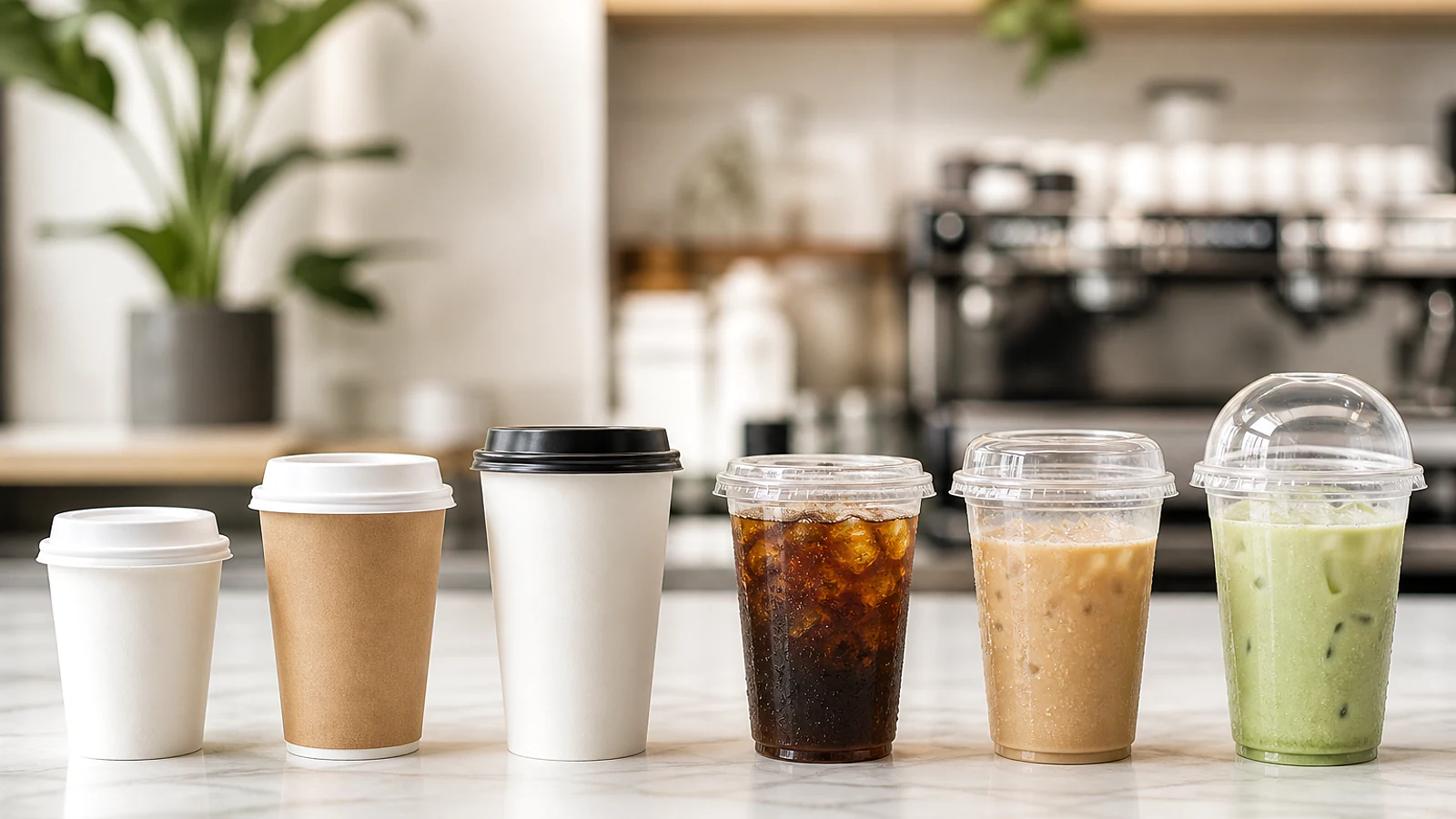
Clear cups can showcase cold brew, layered milk drinks, smoothies, fruit and toppings. Paper offers an opaque branded surface. The correct choice depends on whether product visibility or graphic coverage creates more value for that menu. Test the actual printed or labelled sample under condensation.
Ice increases weight and impacts the wall. Condensation changes grip and can soften unprotected outer paper or affect labels. Run a long cold-hold test in the expected ambient conditions, inside the intended carrier and delivery bag. Inspect stiffness, slipping, print, label edges, lid release and base condition.
Compare usable fill, not only nominal ounces
Paper and plastic cups with the same nominal ounce label can differ in top diameter, bottom diameter, height, taper and lid clearance. Measure the finished drink with ice, foam or toppings and set a safe fill line. A clear 16 oz cup full of ice does not deliver 16 fluid ounces of beverage.
Request dimensional drawings and samples. Check barista dispensers, cup holders, carriers and shelf height. If material selection changes the profile, it may also change recipe appearance and customer perception even when the nominal volume remains constant.
Lid families and accessory compatibility
Paper and plastic cup systems commonly use different rim and lid designs. Within each system, compatible sizes may share one lid family, but this must be verified by SKU. Match cup rim diameter, curl or flange, lid engagement profile, aperture, dome clearance and venting to the actual drink.
Use the cup-and-lid fit and leak-test guide for structured approval. Include straws, plugs, sleeves and carriers in the same matrix. A material change that introduces another lid or carrier SKU can offset savings in the cup itself.
Printing, labels and product presentation
Paper cups offer an opaque print surface; formed plastic cups may use printing, labels or other decoration depending on the product and order. Compare color target, print area, registration, seam or distortion zones, condensation durability and food-contact boundaries. Approve artwork on the final cup template.
For transparent cups, decide how much of the drink should remain visible. A full-wrap label can reduce the clarity benefit. For paper, test whether dark inks or heavy coverage affect appearance around forming lines. Make size and drink identification clear for staff and delivery customers.
Food-contact and intended-use evidence
Request documents that identify the exact material, coating, adhesive, ink and lid relevant to the finished item. Confirm the intended food or beverage type, temperature, contact time and destination market. A generic resin sheet or paper certificate may not describe the converted cup.
The food-grade paper packaging checklist provides a framework for document matching and change control. Apply the same discipline to plastic cups: link evidence to the finished product code and require notification when material, tooling or production location changes.
Do not turn material names into environmental claims
“Paper,” “plastic,” “plant-based,” “recyclable,” “compostable” and “biodegradable” answer different questions. A paper cup can contain a barrier; a plastic cup can use recycled content; either may face collection or processing limits. One word cannot establish the environmental outcome of the full system.
Ask what claim is proposed, which component it covers, which standard or test supports it, whether certification applies, and where the end-of-life route exists. Qualify marketing copy by market and disposal system. Do not promise a local recycling or composting route without confirming that collection and processing accept the used cup and lid.
Recycling and composting depend on local systems
Check municipal or commercial collection, sorting, contamination limits and processor acceptance in each destination. Cup coating, resin identification, color, labels, inks, leftover liquid and separate lids can affect the real route. Instructions used in one country or city may be wrong in another.
Create destination-specific disposal guidance only after verification. If the customer must separate lid, sleeve or straw, make the instructions visible and practical. Keep evidence and review dates with environmental claims because programs and accepted materials can change.
Reusable cups belong in the comparison
For some sites, a reusable program can reduce single-use demand, but it creates washing, return, storage, hygiene, loss and customer-participation requirements. Compare the real operating system rather than assuming reuse is automatically feasible or automatically superior for every location.
A café can support customer-owned cups, a deposit-return pool or dine-in service alongside disposable packaging. Define how mobile, drive-through and delivery orders are handled. Reusable and single-use choices should be part of one service-channel plan.
Matched hot and cold test plan
- Define the exact drink, temperature, ice, toppings, fill and hold time.
- Identify cup, lid, sleeve, straw, label and carrier SKUs.
- Prepare multiple samples using the normal staff workflow.
- Run counter, walking, drive-through or delivery conditions as applicable.
- Inspect leakage, lid lift, wall stiffness, grip, condensation, print and product appearance.
- Record pass or revise by checkpoint and retain approved assembled samples.
Do not compare an empty paper cup with a filled plastic cup or use different drinks and times. Matched conditions are essential for a meaningful choice.
Menu cost and operational complexity
Compare cost per served drink, including cup, lid, sleeve, straw, label, freight, storage, waste and obsolete inventory. Paper and plastic options can have different carton dimensions and accessory counts. A cheaper cup can produce a more expensive system if it creates extra SKUs or failures.
Track sales by hot and cold category. If cold drinks represent a growing share, visibility and condensation performance may justify a dedicated clear-cup line. If the range is mostly hot, a well-tested paper system may simplify service. Let demand and tests drive the assortment.
MOQ, carton ratios and supply continuity
Request MOQ by material, size, print, lid and decoration. Confirm pieces per sleeve, sleeves per case, carton dimensions, gross weight, pallet configuration and lead time. Lid and cup cases may contain different counts, so order ratios must follow actual consumption.
Ask whether alternative materials or factories may be substituted and require written approval before change. Maintain safety stock by SKU and protect rims from crushing. When switching material systems, plan the cutover so old cups and new lids do not become stranded inventory.
Use a weighted decision scorecard
Create one scorecard for the actual beverage program rather than a universal paper-versus-plastic verdict. Weight drink temperature, leak and lid performance, visibility, hand comfort, condensation, printing, service speed, carton space, supply continuity, unit economics and verified end-of-life route. A hot-coffee program may assign more weight to insulation and grip; an iced specialty menu may assign more to clarity and condensation resistance.
Score named products after matched tests and attach evidence to each result. Record the cup and lid codes, material construction, sample date and tester. Do not award points for an environmental claim that lacks relevant documentation or local infrastructure. A transparent scoring method helps purchasing, operations, marketing and sustainability teams understand why one system was selected and what would trigger a review.
Review destination rules before artwork approval
Single-use packaging rules, labeling duties, fees, restricted materials and environmental-claim requirements vary by destination and can change. Confirm current obligations with the responsible local adviser or authority before committing to a material, symbol or printed disposal instruction. A cup accepted in one market may require different marking, reporting or recovery arrangements elsewhere.
Keep the compliance review connected to the exact finished item and sales market. If a program ships to several countries, create a matrix covering cup, lid, sleeve, label, claim wording and required evidence by destination. Freeze the approved market version before printing; otherwise a late compliance change can make existing artwork and inventory unusable.
Pilot a material change before full rollout
When moving from paper to plastic, plastic to paper, or one coating or resin to another, test a limited number of stores or service shifts first. Use the real drinks, staff, equipment, carriers, bins and customer handover. Track preparation time, double-cupping, sleeve use, lid errors, leakage, condensation, waste, complaints and actual disposal behavior.
Update dispensers, shelf labels, recipe cards, point-of-sale descriptions and staff training together. Set a controlled cutover date and keep old and new lid families physically separated. After the pilot, compare expected savings with real consumption and failure data. Approve the wider rollout only when the new system meets the agreed scorecard and the supply plan can support every location.
RFQ checklist for a material comparison
- Hot and cold drink list, temperatures, ice, toppings and hold time.
- Capacity, usable fill and finished dimensions by size.
- Paper wall and barrier or plastic resin and finished-cup specification.
- Exact cup, lid, sleeve, straw, label and carrier SKUs.
- Visibility, condensation, insulation, grip and delivery requirements.
- Food-contact and destination-market documents.
- Environmental claims requested and supporting market-specific evidence.
- Print, label, artwork and size-identification requirements.
- Quantity by size and material, MOQ, carton data, destination and schedule.
- Structural, printed and production-sample test stages.
Send the comparison through the cup RFQ form. Buyers can review custom paper coffee cups, PET cold drink cups, the coffee shop packaging solution and the full cups and bowls range.
Receiving inspection and change control
At receiving, verify material and item codes, dimensions, rim condition, lid fit, print, clarity, contamination, odor, case counts and visible damage. Repeat a shortened hot or cold fill test for a new lot or construction revision. Quarantine unapproved substitutions before service.
Retain the signed specification, supplier evidence, claim wording, test photos, golden sample, lot labels and corrective actions. Require notification for changes in board, coating, resin, recycled content, color, tooling, lid series, printing or manufacturing site.
Frequently asked questions
Are paper cups always better than plastic cups for coffee shops?
No. The suitable choice depends on the exact cup construction, drink temperature, hold time, lid system, local rules, collection route and evidence behind environmental claims. Compare defined products for a defined use.
Can PET cups be used for hot coffee?
Use PET only within the supplier’s documented intended temperature range. PET cold cups are normally specified for chilled beverages. Do not transfer suitability claims from PP or another plastic to PET.
Can paper cups be used for iced drinks?
Some paper cup constructions are specified for cold beverages, but they still require testing for condensation, ice load, hold time and stiffness. Verify the exact coating and cup, not paper as a generic material.
Which cup is best for showing layered or colorful drinks?
A clear cup can present layers, toppings and color directly. A printed paper cup can provide a larger opaque branding surface. Choose according to product presentation and test print durability under condensation.
Do paper and plastic cups use the same lids?
Usually they belong to separate product and rim families. Match the exact cup SKU, rim diameter and profile to the exact lid SKU. Similar nominal capacity does not establish compatibility.
Is a cup recyclable because the material is recyclable?
Not automatically. Collection, sorting, contamination, coatings, labels, color and local processing capacity affect the real route. Qualify claims by product, location and available system.
What belongs in a paper-vs-plastic cup RFQ?
Include drink recipes, temperature, ice and toppings, usable fill, cup and lid dimensions, material and coating, printing, compliance documents, environmental claim evidence, quantity by size, carton data, destination and sample tests.
Compare complete cup systems, not material labels
Share the hot and cold menu, service temperature, cup sizes, lid requirements, printing, environmental claims, quantity by size and destination. GLY PACKAGING can help narrow paper and clear-cup options and prepare matched sample tests.